Cultivation Techniques and Management Methods for Single-Clove Garlic
In recent years, single-clove garlic has become highly favored by consumers for its round, neat, and attractive shape and its convenience for eating. However, in the process of garlic cultivation, the production of single-clove garlic is generally minimized, so its yield is relatively low. Therefore, in order to meet public demand, the artificial cultivation of single-clove garlic has emerged. Now let's take a look at the cultivation techniques for single-clove garlic with the editor.
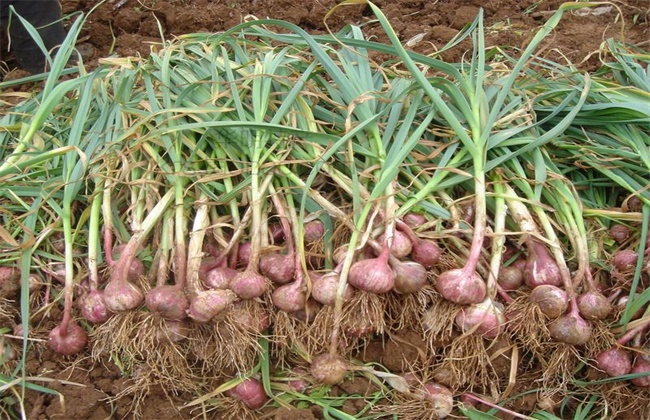
1. Selection of Garlic Seed
Selecting good garlic seed is the key to growing single-clove garlic. The 'Dutou No. 1' garlic variety is preferable; choose plump, full, pest-free, and disease-free small cloves weighing 0.8-1.5 g for sowing. Experience has shown that if the garlic seed is larger than 2 g, then the nutrients are excessive, and the garlic bulb is very likely to split into cloves, making it impossible to form single-clove garlic. If the garlic seed is smaller than 0.5 g, then the produced garlic bulbs are too small and have little economic value, so 0.8-1.5 g is the optimal weight.
2. Sowing Time
For producing single-clove garlic, planting time is of utmost importance. Whether planting succeeds is directly related to planting time. Experiments have shown that sowing from mid-to-late December to early-to-mid January of the following year gives the highest probability of producing single-clove garlic, reaching about 90%, and the commodity quality is good. If sowing is too early or too late, the garlic is very likely to split into cloves. For example, if sowing after March, then the plant mortality rate reaches more than 50%, so planting time must be well controlled when producing single-clove garlic.
3. Sowing
Because sowing takes place in the cold winter when the soil is frozen, sowing is difficult, so low plastic tunnels can be used in combination with cultivation. After the previous crop is harvested, a period before sowing can be used to plant one or two crops of leafy vegetables, and according to temperature changes, the low plastic tunnels can be covered at the appropriate time. When sowing single-clove garlic, remove the low plastic tunnels, level the land, and open furrows for sowing. In addition, because single-clove garlic bulbs are small, compared with ordinary garlic planting area, its yield is relatively low, so in order to improve economic benefits, it is best to plant 100,000 plants per mu, that is, at sowing use a row spacing of 10 cm and a plant spacing of about 7.5 cm, which can achieve relatively high economic returns.4. Field Management
When the soil fertility is fertile, applying 100 kg of high-quality compound fertilizer per mu is sufficient. If the soil fertility is poor, then applying more than 150 kg of high-quality compound fertilizer per mu is preferable. During the growing period, pay attention to timely weeding, and watering should also be more frequent than for ordinary garlic; generally, watering is needed once every 20 days. In addition, pay attention to controlling garlic maggots and Chinese chive maggots. Also, the harvest time of single-clove garlic is earlier than that of ordinary garlic. When the garlic leaves turn grayish green, the bottom leaves wither and yellow, and the pseudostem becomes soft and fully swollen, it can be harvested.
The above is an introduction to the cultivation techniques for single-clove garlic. We hope it can help you. To learn more related knowledge, please stay tuned to us.