Detailed Explanation of Key Points for Early Spring Vegetable Transplanting Management
It is now the time for early spring vegetable transplanting. If the transplanting time or the transplanting water is not done correctly, the survival rate of seedlings after transplanting will drop greatly. So how should early spring vegetable transplanting be managed to allow crops to grow better? Let's learn about it together below.
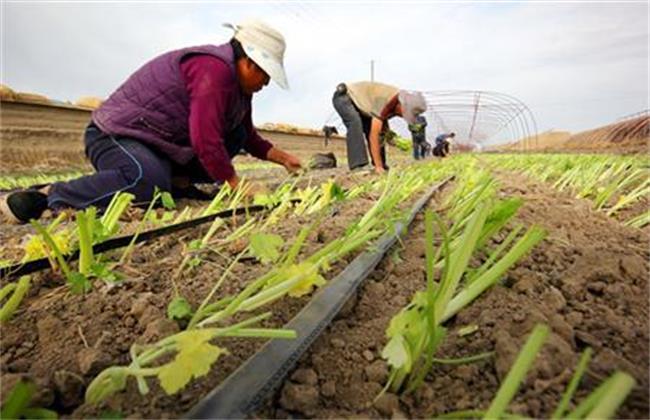
1. Transplanting time
In order to cultivate strong roots, it is recommended to limit transplanting to sunny weather, and it is best to keep 2-3 consecutive good weather days. When transplanting is carried out under sunny conditions, the seedlings will show slight wilting, but this kind of wilting is the seedling's self-regulation, a change the seedling makes in order to adapt to the environment. This will not only reduce water evaporation from the plant, but also promote faster and deeper renewal of growth. At the same time, transplanting small seedlings is more conducive to seedling recovery. After 2-3 days, as new roots grow, the plant enters a normal growth state, and acute wilting will not occur.
2. Transplanting method
For crops transplanted in early spring, no matter what the mistake is, ridge planting must be used, because at this time the soil temperature is still low and the air temperature is low. Ridge cultivation is conducive to seedling recovery and can also raise the soil temperature. When transplanting, plant and row spacing is also extremely critical. Be sure never to transplant on flat beds. The plant and row spacing for transplanting should not be too dense or too sparse, otherwise it will have a great impact on later yield. During transplanting, it is generally necessary to plant somewhat shallowly, because in early spring the temperature is low, and planting too deep makes it difficult to develop roots.
3. Temperature and humidity management
During transplanting and seedling recovery, the day-night temperature difference should be appropriately widened for seedling hardening, so as to promote the seedlings to become stronger. Generally, legume vegetables should be kept at 26-28 degrees during the day and 12-14 degrees at night; solanaceous and fruiting vegetables should be kept at 25-28 degrees during the day and 12-14 degrees at night; melon and fruit vegetables should be kept at 26-30 degrees during the day and 14-15 degrees at night. In addition, the humidity in the greenhouse should be controlled at 70%-80% as much as possible. When the humidity is too high or the soil temperature is [too low], appropriate ventilation is needed, which can also prevent occurrence of disease. When necessary, a dehumidifier needs to be used to dehumidify the indoor space. When the humidity is too low, spraying water can be used to increase humidity.
4. Fertilizer and water management
After transplanting, the plants need reasonable watering to keep the soil moist, so that the plants do not wilt. Generally speaking, the water for seedling recovery is applied about one week after transplanting, chosen on a sunny day, and it is best to apply a small amount of water under the film. After watering, pay attention to raising the [temperature], and at the same time ventilate in time to remove moisture. When watering, choose clean water quality to prevent algae from growing and blocking drip irrigation pipes. At the same time, timely topdressing should be combined with watering. When the base fertilizer is sufficient, not much fertilizer is used at transplanting. The main purpose is to promote root growth, and using functional fertilizer well is enough.
The above is an introduction to the key points of early spring vegetable transplanting management. I hope it can help you. To learn more related knowledge, please follow us.