Detailed Explanation of the Key Technical Points for Schisandra Seedling Management
Schisandra is a medicinal herb frequently used in traditional Chinese medicine, with effects that strengthen the body and boost health. It is now cultivated artificially in many regions and offers good economic returns. Schisandra can be propagated by seed or by cuttings, but because the survival rate of cuttings is low, seed propagation is mostly used. Now let's take a look at Schisandra seedling management together with the editor.
1. Seed collection
Schisandra seeds are best collected during the autumn harvest period. Select fruit clusters with large, uniform berries for seed use. Put the harvested fruit clusters into a container and rub them with your hands so that the seeds separate completely from the flesh. Then wash the rubbed seeds in clean water, remove the flesh and shriveled seeds, rinse again with clean water, scoop them out and spread them on a mat to dry in the sun or in the shade. Be careful not to expose them to strong direct sunlight. When the seed moisture content is around 15%, store them in a ventilated, dry place.
2. Seed treatment
Schisandra seeds have the characteristic of post-embryonic ripening dormancy and belong to the deep dormancy type. At harvest time, the seed embryo has not yet fully developed and needs to continue developing in a cold, moist field environment. Therefore, the seeds must be stratified in sand for 3-4 months until the embryo matures, after which the seeds can germinate. Sand stratification generally involves mixing the seeds evenly with wet sand at 2-3 times the volume of the seeds, placing the mixture in a pit of suitable size, covering it with 10-15 cm of fine sand, and then covering it with rice straw or a straw mat for cold treatment.
3. Sowing methods
Schisandra can be sown in spring or autumn. Spring sowing mainly uses seeds that have already germinated, while autumn sowing can be done by directly sowing seeds threshed from fresh fruit. For ease of management, drilling in rows is preferable. First open furrows 2 cm deep on the seedbed surface with 10 cm between furrows, then sow the seeds in the furrows at a spacing of 5 cm between plants, with a sowing rate of about 5 kg per mu. Broadcasting is also possible, generally using 20-25 kg of seed per mu. After sowing, cover with 2-3 cm of soil, lightly press down, and water thoroughly, then cover once with rice straw to keep warm and moist and speed up emergence.
4. Seedling stage management
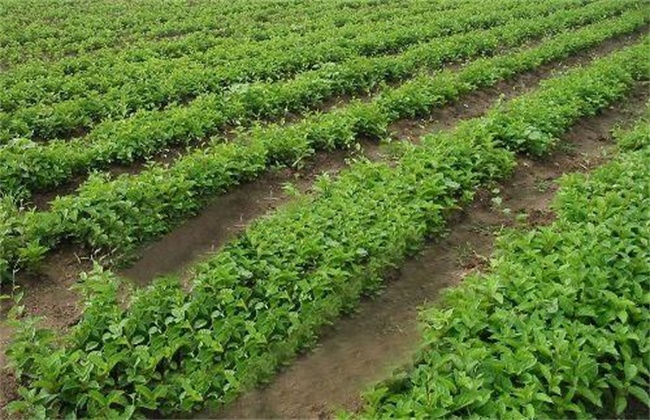
When most of the seeds have emerged, remove the rice straw promptly, and at the same time build a simple shade shed and shade net. When the seedlings grow to 5-6 cm, remove the straw curtains in batches; after emergence, uncover the straw curtains and add a shade net at the same time. Weed and loosen the soil around the seedlings at the proper time, and water and fertilize appropriately. When 3-4 true leaves have grown, thin the seedlings to a spacing of 7-10 cm between plants.
The above is an introduction to Schisandra seedling management techniques. We hope it can help you. If you want to learn more related knowledge, please stay tuned to us.