Detailed Explanation of Key Points of Spring Fertilization Techniques for Garlic
Garlic is one of the common seasoning vegetables, and it has a high demand for fertilizer and water during the growing process. To achieve high yield and high quality, spring topdressing must be taken seriously. So how should garlic be topdressed in spring? Let's learn about it together with the editor.
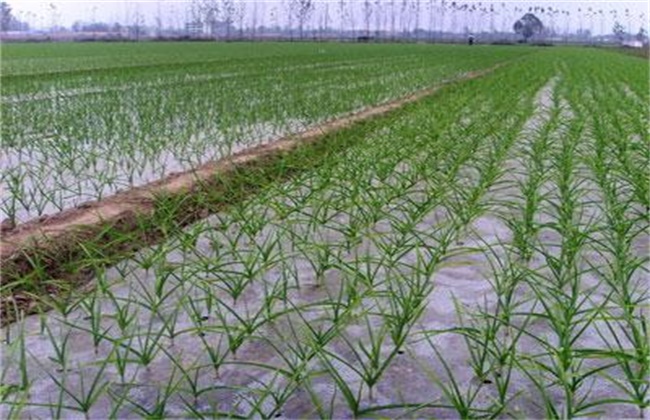
1. Green-up fertilizer
In spring, as the temperature gradually rises, garlic will also enter the green-up stage. Generally, when the temperature exceeds 7 degrees, garlic enters the green-up stage and begins to grow. For plots with sufficient base fertilizer, no topdressing is needed at this time. It is only necessary to appropriately spray foliar fertilizer and growth regulators after the garlic turns green. The most commonly used are potassium dihydrogen phosphate and brassin, which have the effect of enhancing disease resistance and stress resistance. In addition, late spring cold spells often occur in spring, and spraying them can also prevent low-temperature freezing damage.
2. Garlic sprout fertilizer
Garlic sprout fertilizer is generally applied around Qingming. At this time, the garlic plants enter a rapid growth period, and the garlic sprouts at the roots have also begun to differentiate and grow. If the base fertilizer was applied at sowing, timely topdressing is needed. At the same time, this is also a period when garlic has a relatively large water demand. Urea 2-3 kg can be applied with irrigation water. Be sure not to apply too much, so as to avoid damage to the root system and also cause premature yellowing of garlic leaves, because nitrogen elements will also convert into ammonia gas. Due to the obstruction of the plastic mulch, it cannot dissipate and will burn the root system, causing large-scale yield reduction. For plots with sufficient base fertilizer, no fertilization is needed this time; it is only necessary to spray an appropriate amount of insecticide to prevent garlic maggots. The insecticide must be sprayed evenly and thoroughly.
3. Bulb enlargement fertilizer
This fertilization can be applied with irrigation water before and after harvesting garlic sprouts. Generally, urea 2.5-3 kg and potassium dihydrogen phosphate 2 kg are applied per mu with irrigation water. After application, harvest can begin, and because the garlic sprouts have just been watered at this time, the moisture is sufficient and the yield is high. After the garlic sprouts are harvested, the nutrients of the garlic begin to flow back to the root system, forcing the underground bulbs to grow. At this time, if water is insufficient, timely irrigation should be carried out. Also, apply urea 2.5 kg per mu with irrigation water. After harvesting garlic sprouts, the earlier the watering, the better. It should be noted that irrigation and fertilization should be stopped 7-10 days before harvest.
The above is an introduction to spring fertilization techniques for garlic. We hope it can help you. To learn more related knowledge, please stay tuned to us.