What causes yellowing of wheat seedlings
Growing wheat is very common in China, and wheat can be said to be a food crop second only to rice in China. Its planting area in China is also very large. However, because many people's planting techniques are not mature, many problems often occur. One of them is yellowing of wheat seedlings, which can have a great impact on yield. So what causes yellowing of wheat seedlings? Below, the editor will briefly introduce it to everyone. Let's take a look!
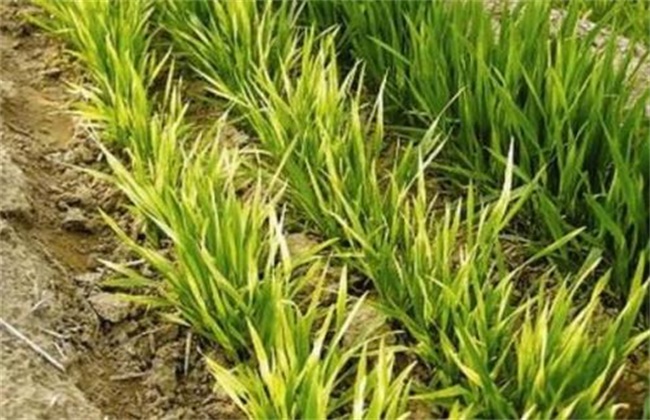
1. Sowing too deep
Sowing too deep is one of the main causes of yellowing of wheat seedlings. It generally occurs on dry sloping land and sandy land. When sowing wheat, the sowing depth should be kept at about 4 cm. If sown too deep, the lower part of the plant will lack nutrients. The wheat seedlings will also become thin and weak due to lack of nutrients, and the amount of tillering will decrease significantly. In severe cases, no tillering may occur, resulting in a single-stem seedling. Then, before the new tillering node begins to produce secondary roots, the lower roots lack oxygen and nutrient absorption is difficult, so the wheat seedlings will show yellowing due to fertilizer deficiency.
2. Sowing too shallow
In addition to sowing too deep, sowing too shallow can also cause yellowing of wheat seedlings. If sown too shallow, wheat seeds are prone to floating seeds, and the resulting seedlings are also prone to yellowing. This phenomenon generally occurs mostly in paddy fields and wheat fields with poor land preparation quality. When sowing, if the sowing is too shallow, then when drought occurs, the tillering node is likely to be in the dry soil layer. This reduces the number of secondary roots, and if the tillering node is too high or exposed, it is also highly susceptible to freezing damage, causing yellowing of the wheat seedling leaf tips.
3. Toxic gases
If too much toxic gas is produced in the wheat field, it is also very easy to cause yellowing of wheat seedlings. This situation mainly occurs in wheat fields where straw is returned to the field, farmyard manure is not fully decomposed, and weeds are excessive. If the land preparation quality is too poor and plowing is uneven, it is very easy to cause the wheat roots to be suspended. This leads to poor growth of wheat seedlings. And if the farmyard manure is not fully decomposed, it is prone to releasing toxic gases during fermentation, causing damage to the young roots and leading to yellowing of wheat seedlings.
4. Other causes
Waterlogging is also very likely to cause yellowing of wheat seedlings, mainly occurring in paddy fields and low-lying field plots. During wheat growth, the suitable soil moisture content should be about 65%. If the moisture is too high, it is easy to cause oxygen deficiency in the roots, and nutrient absorption is delayed, causing fertilizer deficiency and yellowing of wheat seedlings. In addition, excessive sowing density is also one of the main causes. If sown too densely, the nutritional area per wheat plant is too small, which easily causes missing tillers, resulting in empty nodes, and the wheat seedlings are also prone to excessive growth.
The above is a brief introduction to what causes yellowing of wheat seedlings. That is all for today's introduction. This article is for reference only, and I hope it can be helpful to everyone!