Detailed Explanation of Key Technical Points for Spring Management of Sichuan Pepper Trees
The Sichuan pepper tree is an important economic tree species and is now a wealth-generating project in many regions. It is planted in many areas, and to ensure high yield and high quality of Sichuan pepper trees, special care must be taken in spring management every year. Now let's take a look at the spring management techniques for Sichuan pepper trees.
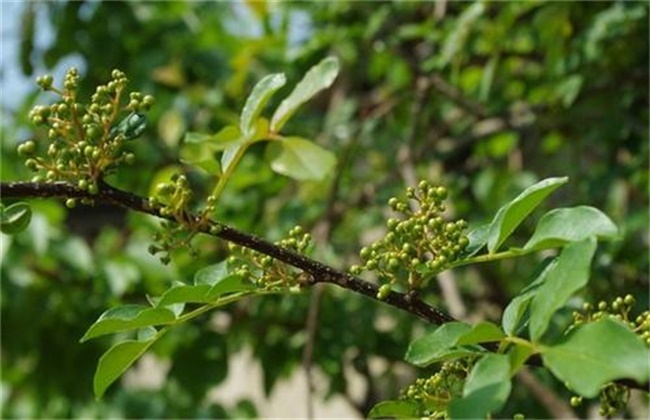
1. Fertilization and Foliar Spraying
During the growth and development of Sichuan pepper trees, they need to absorb large amounts of nutrients from the soil. Therefore, in addition to applying base fertilizer immediately after harvest, topdressing should be done twice in spring and summer. The first topdressing is in April-May with human and livestock manure, combined with a small amount of nitrogen fertilizer. The second fertilization is in June-July, with a quick-acting chlorine fertilizer applied as topdressing, mixed with a small amount of phosphorus and potassium fertilizer to promote high yield. Fertilization can be done by the hole method or ring trench method, digging holes at the drip line of the canopy, and covering with soil immediately after fertilization to prevent fertilizer efficiency from volatilizing. In addition, after flower drop, immediately spray potassium dihydrogen phosphate foliar fertilizer 2-3 times, which can produce excellent results.
2. Shaping and Pruning
Old and weak trees are suitable for pruning in spring, while vigorously growing young trees can be pruned in summer. Spring pruning mainly adopts methods such as pulling, pressing, propping and bracing to open up the angle of the main branches. Old trees should be renewed and rejuvenated, making full use of water sprouts (vigorous shoots). Weak trees should be pruned relatively heavily to stimulate their growth. Summer pruning mainly involves pinching and heading back water sprouts to reduce nutrient consumption as much as possible, and promptly thinning out densely growing branches to allow ventilation.
3. Cultivation and Weeding
The soil mounds piled up in winter to prevent freezing should be opened up promptly after temperatures rise in spring, and the tree disks should be re-dug at the same time to increase the water content of the soil under the canopy. The size of the tree disk should be close to that of the canopy. During the rainy season, the soil mound at the root collar should be piled higher to prevent excessive water accumulation. Sichuan pepper trees are afraid of weed infestation, so after the beginning of spring, a general cultivation and weeding should be carried out once, and several more weedings should be done throughout the year's growth process to prevent weed infestation. After the weeds are sun-dried, they should be buried in trenches to increase soil fertility.
4. Pest and Disease Control
Pests and diseases are a major obstacle in Sichuan pepper production, directly affecting the yield and quality of Sichuan pepper. Therefore, starting from spring, pest and disease monitoring and control work should be done well to reduce the damage caused by pests and diseases as much as possible.
The above is an introduction to spring management techniques for Sichuan pepper trees. We hope it can help you. If you want to learn more related knowledge, please follow us.