Detailed explanation of the key technical points for growing white sesame
Sesame comes in black and white varieties. White sesame is mostly used for food, while black sesame is mostly used for medicinal purposes. White sesame has an extremely high oil content and a mellow aroma. The oil pressed from it can be used both raw and heated, and the foods made from it are world-famous. So how is white sesame grown? Follow along with the editor to learn about it.
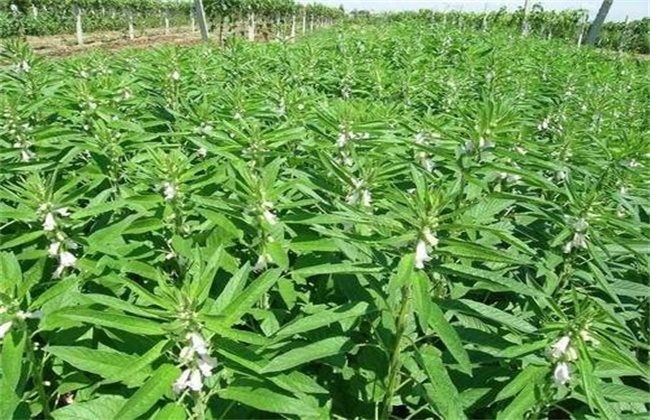
1. Land selection and fertilization
When planting, choose fields far from polluted areas, with slightly elevated and level terrain, deep soil layers, fertile soil, and good water conservancy conditions for irrigation and drainage. Before sowing, carry out intensive cultivation so that the soil is fine and level. In addition, because sesame has a relatively shallow root system, fertilization should be applied close to the plants; applying fertilizer together with sowing or applying base fertilizer shallowly works better. Generally, apply 50 kg of superphosphate, 8-10 kg of potassium sulfate, and 30-40 kg of cake fertilizer and organic fertilizer as base fertilizer.
2. Sowing and raising seedlings
For white sesame, sowing should be done no later than late June. Generally, drilling is the suitable sowing method, with the sowing rate controlled at about 1 jin per mu. Before sowing, seeds can be treated with chemicals for seed dressing, which gives better insect-killing and sterilization results. After emergence, thin the seedlings in time when the seedlings have grown to one true leaf, and final thinning when they have three pairs of true leaves. During the true leaf stage, cultivation and weeding can be carried out, generally 2-3 times. In high temperatures, chemical herbicides can be used to avoid weed infestation. During the last cultivation, earth up soil to cover the roots to prevent lodging.
3. Field management
In the late full-bloom stage of sesame, promptly pinch off the growing tips of the top and side branches. After topping, promptly spray once with a chlorothalonil agent, combined with an appropriate amount of borax and monopotassium phosphate mixed solution, to supplement nutrients, delay leaf senescence, reduce diseases, improve photosynthetic efficiency, and increase yield and quality. For pests and diseases, adopt an integrated control approach combining biological control, physical control, and chemical control. In addition, note that no chemicals may be used in the 10 days before harvest to avoid excessive pesticide residues.
4. Timely harvesting
When the leaves of the sesame plants have basically all fallen off, about one third of the capsules on the lower part of some plants have slightly split, the capsules on the middle and upper parts of the whole plant are slightly yellow, and the seeds show little of their original color when opened, it is time to harvest and bundle them promptly. When harvesting, use a sickle to cut near the capsules; do not take the roots, so as to avoid bringing soil and affecting quality.
The above is an introduction to white sesame cultivation techniques. We hope it helps you. To learn more related knowledge, please stay tuned to us.