What to Do About Abnormal Onion Growth? Detailed Pest and Disease Control Measures
Onion, also known as cong tou and round onion, is a common vegetable in our daily lives. It not only has extremely high nutritional value, but can also help prevent and treat osteoporosis symptoms, and also has anti-cancer and anti-aging effects, with certain health benefits for high blood pressure and cardiovascular and cerebrovascular diseases. During the planting process, abnormal growth often occurs, so how should abnormal onion growth be prevented and controlled? Let's learn about it together with the editor.
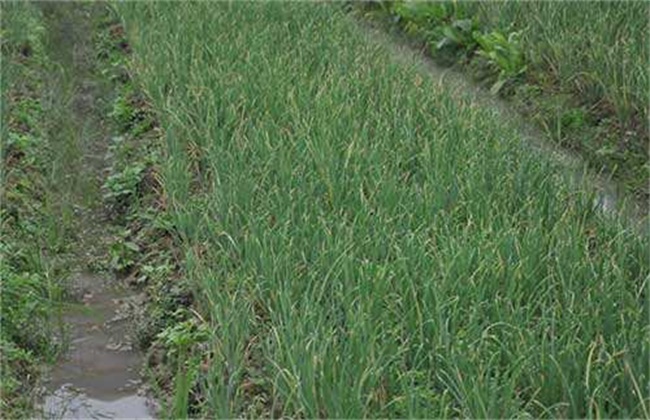
1. Strictly select varieties
During production, it is best to use local excellent varieties, so that the onions grown can be guaranteed. If introduction of varieties is needed, then according to the response of the introduced varieties to low temperature and day length, try to choose varieties with strict low-temperature requirements. Excellent varieties are the prerequisite for high yield and quality. In addition, before planting, seeds should also be strictly selected, carefully chosen, and strong seedlings should be cultivated.
2. Choose a suitable sowing period
Onion is a vernalization-type plant. Sowing too early will cause the seedling age to be too long and the seedlings to be too large, exceeding the critical size required for vernalization, which can easily lead to vernalization or incomplete vernalization information, causing abnormal bulb growth. Therefore, the correct sowing period should be chosen according to variety characteristics and climate features. Generally, autumn sowing is from September to October, while spring sowing is generally from March to April.
3. Strengthen fertilizer and water management
Fertilizer and water have a great impact on onion growth. If irrigation is too much and nitrogen fertilizer is excessive, the seedlings will become too large, delaying or inhibiting bulb formation. Therefore, attention should be paid to the application of phosphorus and potassium fertilizers, and excessive application of nitrogen fertilizer should be avoided, so as not to cause overly late growth of the aboveground parts and the occurrence of bolting and delayed bulb expansion. Before and after the emergence of spring-sown seedlings, the soil needs to be kept moist, with frequent watering and light intertillage. The vigorous leaf growth period and the bulb expansion period are the periods when onions have the greatest demand for fertilizer and water. Watering and fertilizing should be done in a timely manner. Per mu, 15 kg of diammonium phosphate, 20 kg of diammonium phosphate, and 3-5 kg of potassium sulfate can be applied as topdressing.
4. Control insect pests
The main control target is the damage caused by onion maggots. Dimethoate and dichlorvos can be used for irrigation along with water. The use of raw manure as fertilizer is prohibited, because onion maggots are attracted to raw manure. Fully decomposed organic fertilizer should be used, applied evenly and deeply, and seeds should be separated from fertilizer. For plots where onion maggot damage has already occurred, irrigation should be done frequently, and flood irrigation can be used when necessary, but irrigation should be coordinated with onion growth.
The above is an introduction to control measures for abnormal onion growth. We hope it can help you. To learn more related knowledge, please stay tuned to us.