Detailed explanation of key management techniques for yam in the mid-to-late stage
Yam is what we commonly call Chinese yam in daily life. It is both a medicinal herb and a vegetable. It has great nutritional value, so it is also welcomed by many people. When growing yam, its management work is very important. We need to manage it reasonably according to the growth stage of yam, and the mid-to-late stage of yam requires special attention. So today, the editor has brought you the management techniques for the mid-to-late stage of yam. Let's take a look below!
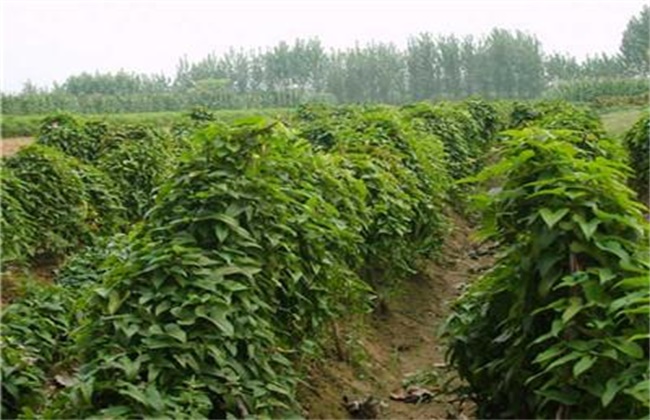
1. Fertilizer and water management
In the mid-to-late stage of yam, fertilizer and water management is certainly indispensable. When the stems and leaves of yam have covered the entire trellis surface, we should fertilize once, mainly with urea, generally applying about 20kg per mu. Some potassium fertilizer can also be applied appropriately, or an appropriate amount of foliar fertilizer can be sprayed to enhance the stress resistance of yam and increase yield. Although yam has relatively strong drought tolerance, in order to increase its yield, when encountering dry weather, attention should still be paid to watering. However, in rainy weather, accumulated water should be drained in time to avoid waterlogging damage, which can cause yam to die due to water accumulation and lack of oxygen.
2. Pest and disease control
In the mid-to-late stage of yam, there are also many pests and diseases. Therefore, we should also pay attention to pest and disease control. Among them, the most common pests and diseases include anthracnose and root-knot nematodes. Among them, anthracnose is one of the most common diseases in yam production. We should often observe the growth of yam. If symptoms similar to anthracnose are found, then pesticides should be sprayed in time for control. In the early stage of anthracnose, fungicides such as mancozeb or carbendazim can be used for control, generally spraying once a week for about three consecutive weeks.
3. Timely harvesting
In the mid-to-late stage of yam, it is usually also the harvest period for yam. The harvest period of yam is generally from October each year to the beginning of winter. When harvesting, first start from one side of the ridge and dig a pit of about 60 cm square. Then shovel out the soil along the area about 10cm below the ground surface where the yam is located. Continue until the tip of the yam tuber is visible at the bottom of the yam ditch, then hold the upper end of the yam with one hand, and use the other hand to cut off the lateral roots behind the rhizome, down to the root system close to the ground layer, so that a complete yam can be taken out.
The above is a brief introduction to the mid-to-late stage management techniques for yam. The management work in the mid-to-late stage of yam is very important. If managed improperly, it will have a great impact on the yield and quality of yam, so everyone must pay more attention. That's all for today's introduction. This article is for reference only, and I hope it can be helpful to everyone!