The correct method of hilling soil around Welsh onions and points to note
In the process of growing Welsh onions, hilling soil is necessary, because hilling is an important measure for softening the leaf sheaths, preventing lodging, and improving the yield and quality of the white stalks. Reasonable hilling of Welsh onions not only increases the length of the white stalks and prevents lodging and bending, but also greatly improves the taste and quality of the Welsh onions. So what should be noted when hilling soil around Welsh onions? Let's take a look together.
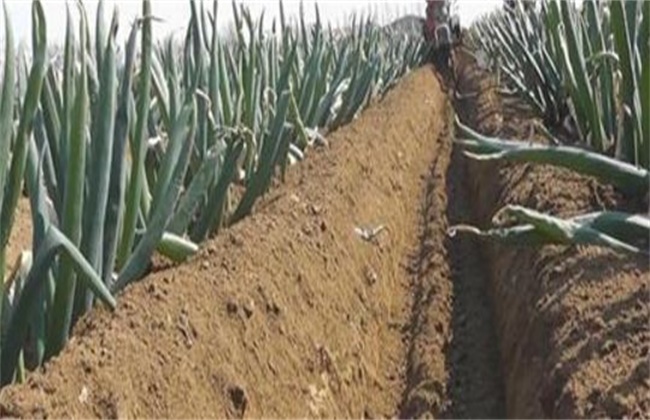
1. Timing of hilling
Generally, hilling can be carried out when Welsh onions have grown to about 30 cm; it should not be done too early, otherwise it will cause slow growth and bending of the Welsh onions. Hilling is best done in the afternoon, because at this time the leaves are tender and will not be damaged; if this timing is missed, the leaves of the Welsh onions will be damaged during the hilling process.
2. Reasonable topdressing
During the growth of Welsh onions, about 3 rounds of hilling are generally needed. The first is light hilling, with the hilling thickness controlled at about 5 cm, generally carried out after the Welsh onions have grown to 30 cm and the white stalks have formed; 25 jin of compound fertilizer combined with 150 jin of organic fertilizer can be applied per mu to encourage the roots to grow downward and meet the needs of the Welsh onions' early growth. When the Welsh onions have grown to 40-45 cm, carry out the second hilling, with the hilling thickness controlled at about 10 cm; this time the topdressing should be mainly nitrogen and potassium fertilizer to promote the growth of the pseudostems and leaves. The last hilling is about 20 days before harvest; in order to improve the quality and taste of the white stalks, the hilling thickness should be controlled at about 10 cm, and no nitrogen fertilizer should be added in this topdressing, otherwise it is easy to cause the white stalks of the Welsh onions to become soft and poor in taste.
3. Hilling method
The width of soil taken should not be too wide; take soil from the middle of the rows, and the width of soil taken should not exceed one third of the row spacing, nor should it be too deep, so as to avoid damaging the roots. After hilling, the soil should be patted firm to prevent it from being washed away and collapsing in the rain. Hilling is also not suitable when the soil is too dry or too wet. The pseudostems of the Welsh onions should be kept upright, so hilling should not be too deep; at most bury up to the leaf sheaths, otherwise it is easy to cause the white stalks to bend.
4. Pay attention to the season
Hilling is not suitable in high-temperature seasons, otherwise the pseudostems will rot because they are buried too deep in the soil. The number of hillings should also not be too many; frequent hilling not only increases the workload, but also inevitably damages roots and leaves and affects the growth of the Welsh onions. Do not hill too deep at one time, otherwise the leaves will be buried and rot very easily. Each hilling should be 3-4 cm thick, and the soil should be hilled up to the boundary between the leaf sheaths and the leaf blades, that is, only bury the leaf sheaths and do not bury the leaf blades.
The above is an introduction to Welsh onion hilling methods and points to note. We hope it can help you. To learn more related knowledge, please stay tuned to us.