Detailed Explanation of Key Technical Points for Low-Temperature Freeze Protection of Vegetables
After winter arrives, vegetables are highly susceptible to freeze damage, and freezing in particular has a huge impact on vegetable yields. To grow vegetables well, cold and freeze protection measures are essential. How can vegetables overwinter safely? Taking good low-temperature freeze protection measures is extremely important. Let's learn about it together below.
1. Late uncovering and early covering
On sunny days, greenhouse vegetables need ventilation for hardening off the seedlings, with late uncovering and early covering. Ventilate for a while around noon to promptly release harmful gases such as ammonia out of the greenhouse. During continuous rainy days, when long cloudy weather suddenly turns sunny, or when sunny days follow snowfall, do not uncover all the covers at once. Instead, uncover them in a timely manner so the plants can slowly adapt to the environment, which benefits healthy vegetable growth. To prevent freeze damage, it is also necessary to keep the greenhouse film clean, increase film transparency, increase light exposure, and raise the greenhouse temperature.
2. Fertilizing and earthing up
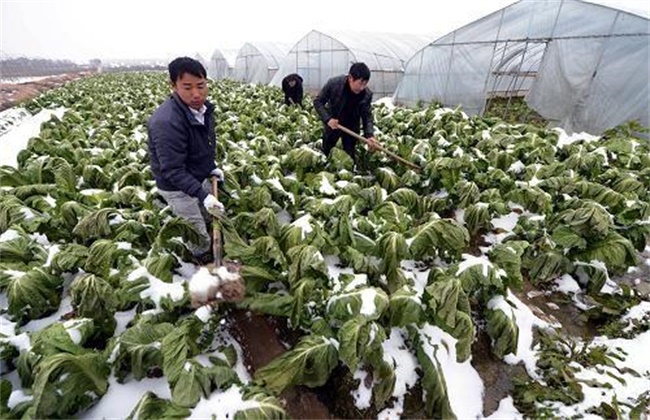
Cultivating and earthing up with fertilizer is a professional technique for freeze protection of vegetables. Generally, decomposed farmyard manure can be applied at the root zone of vegetables, which loosens the soil, raises the ground temperature, and protects the vegetable roots. Especially for low-lying plots, ditches should be dug well around the perimeter to ensure the ditches are unobstructed, so that standing water can be drained promptly after winter rain and snow. After rain and snow, promptly clear the snow from the greenhouse to prevent the snow from collapsing the greenhouse.
3. Controlling nitrogen fertilizer
Too much nitrogen fertilizer should not be applied to vegetable seedlings, because seedlings have poor cold resistance. Therefore, before low-temperature freeze damage arrives, a 0.2% potassium dihydrogen phosphate solution can be sprayed on the leaves 2-3 times. You can also broadcast plant ash once on the production surface, which can prevent cold and resist freezing, increase nutrients, and has an excellent effect on preventing root rot. In addition, winter irrigation water must be applied thoroughly and sufficiently, so that the vegetables in the field can overwinter safely.
4. Strengthening covering
Before low-temperature freeze damage arrives, open-field vegetables need to be covered with straw, plastic film, cloth, etc. For greenhouse vegetables, the greenhouse supports should be reinforced in advance, the greenhouse film pressed tight, and a multi-layer covering method adopted by adding small and medium-sized arched sheds inside the greenhouse and covering them with film, straw curtains, or non-woven fabric. This can effectively raise the growing temperature of vegetables and reduce heat loss.
The above is an introduction to low-temperature freeze protection techniques for vegetables. We hope it helps you. To learn more related knowledge, please keep following us.