Analysis of the Causes of Black Heart in Potatoes and Detailed Explanation of Prevention Measures
The potato is an important staple crop worldwide, and its planting area is gradually increasing. It has a very high utilization rate, as it can be made into many kinds of food, and it stores well and has strong adaptability, making it suitable for cultivation in many regions. However, during either the growing period or the storage period, potatoes can develop the problem of black heart. What causes this? Let's find out together.
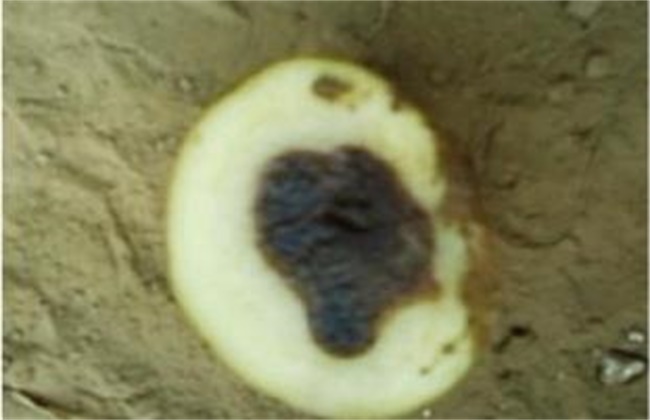
I. Causes of Black Heart in Potatoes
There are mainly two types of black heart in potatoes: one is pathological black heart, and the other is physiological black heart. When black heart occurs in potatoes, it has a very serious impact on quality, causing the tubers to rot and lose their commercial value.
1. Pathological black heart
This type of black heart is caused by blackleg disease. When the disease occurs, potatoes show obvious stunting symptoms, and also become stiff and upright with yellowing leaves. The leaflets on the plant clearly curl upward. In the late stage of the disease, the stem turns black and rots, and the plant dies. In affected tubers, rotting and blackening first begin at the stolon attachment point and then develop inward, resulting in black heart. In high-humidity environments, plants are more susceptible, and after the disease occurs they rot very quickly and give off a very foul odor. Pathological black heart can occur during both the growing period and the storage period.
2. Physiological black heart
This type of black heart mainly occurs during storage, or forms during transportation. The main cause is lack of oxygen; when the tubers cannot get enough oxygen, black heart develops. The main symptoms occur inside the tuber and are difficult to detect from the outside. Only after cutting it open can one find that black heart has already formed in the center. The skin also becomes hard and loses water, and its glossiness and smoothness clearly decline. The outside is not prone to rotting, and there is no particular abnormal odor. In severe cases, it spreads to the outer sprouting points.
II. Prevention Measures
1. Pathological black heart
For black heart caused by blackleg disease, start from the source and strictly select seed tubers, rigorously screening out diseased potatoes to minimize the occurrence of blackleg disease. If a knife accidentally cuts a diseased tuber, besides destroying the diseased tuber, the knife must also be disinfected promptly to avoid cross-infection. Choosing varieties with strong disease resistance can also reduce the occurrence of the disease. During the growing period, if diseased plants are found, pull them out and destroy them promptly. In addition, blackleg disease is prone to breeding in rainy seasons, so drainage during the rainy season must be done well.
2. Physiological black heart
For black heart caused by physiological factors, adjust the storage environment promptly, avoid piling too high or too thick, and choose a cool, well-ventilated, and low-temperature environment for storage. This is because physiological black heart can only be avoided when air circulation is good and the temperature is suitable. Especially when bagging, try not to use airtight plastic bags; once the oxygen deprivation lasts too long, it is very likely to cause black heart in potatoes.
The above is an introduction to the causes of black heart in potatoes and prevention measures. We hope it can help you. If you want to learn more related knowledge, please stay tuned to us.