Detailed Explanation of Key Cultivation Techniques for Cold-Water Wild Rice Stem
Cold-water wild rice stem is the wild rice stem harvested by using cold-water irrigation during the cultivation of wild rice stem. Cultivating wild rice stem in this way is beneficial to the growth of wild rice stem and the formation of the stem, and the wild rice stem varieties are excellent. Follow the editor below to take a look at the cultivation techniques for cold-water wild rice stem.
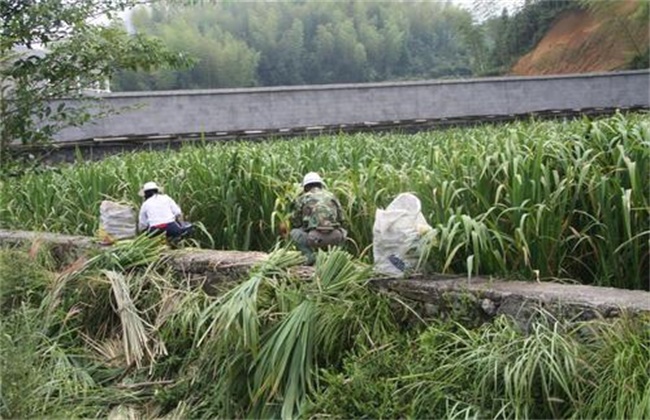
1. Site selection and land preparation
For cold-water wild rice stem cultivation, it is advisable to choose farmland with cold-water irrigation from a reservoir, planted in concentrated contiguous plots, and the reservoir's water storage capacity is required to reach more than 20 million cubic meters. Only with sufficient water source will the cooling effect be good. When plowing the wild rice stem field, apply 2500-3000 kg of decomposed organic fertilizer per mu. If organic fertilizer is guaranteed, it can be combined with chemical fertilizer, then irrigate and rake the field surface level.
2. Fertilization
Because the growth period of cold-water wild rice stem is short, base fertilizer should be applied heavily and topdressing should be applied early. The best fertilization amount is half base fertilizer and half topdressing. In addition to sufficient organic fertilizer, the base fertilizer also requires 50 kg of superphosphate and 25 kg of ammonium bicarbonate per mu. Apply tillering-promoting fertilizer 7-10 days after planting, generally 10-15 kg of urea per mu, then depending on the growth of the wild rice stem plants, apply quick-acting nitrogen fertilizer once every 25 days, with 10-20 kg of urea per mu each time, until fertilization stops in late July. If topdressing is improper, or too much quick-acting nitrogen fertilizer is applied, it is very easy to cause excessive vegetative growth, increased tillering, and delayed stem formation, so cold-water wild rice stem generally is not given fertilizer for stem formation.
3. Water management
The irrigation of cold-water wild rice stem generally follows the principle of shallow—deep—shallow. After planting and before tillering, only a water layer of 3-5 cm needs to be maintained to help raise the ground temperature and promote rooting and tillering. After June, deepen the water level to 12-15 cm, and at the same time change the water frequently to lower the water temperature and prevent soil oxygen deficiency. After entering the stem formation period, the water layer should be deepened to 15-18 cm, but it must not exceed two-thirds of the pseudostem, so as to avoid elongation of the rhizome. In the late stem formation period, the water layer should be lowered to about 3-5 cm to facilitate harvesting, and afterward maintain a shallow water layer or a moist state for overwintering, but it must not be dry.
4. Pest and disease control
The main diseases during the growth period of cold-water wild rice stem are rust disease and helminthosporium leaf spot, and spraying can begin at the early stage of onset for both. Wild rice stem rust disease can be controlled by spraying triadimefon 1-2 times, with an interval of 7-10 days. Helminthosporium leaf spot can be controlled by spraying tricyclazole powder, also once every 7-10 days. The main insect pests include the greater rice borer, the striped stem borer, the long-winged planthopper, whiteflies, the black-tailed leafhopper, and others. Pay attention to spraying the corresponding pesticides for control, and also pay attention to rotating pesticides to avoid developing resistance.
The above is an introduction to the cultivation techniques for cold-water wild rice stem. We hope it can help you. If you want to learn more related knowledge, please follow us.