How to Grow Jerusalem Artichokes? Detailed Guide to Key Planting Points and Techniques
If you want to grow Jerusalem artichokes well, you need to know how to handle each stage and what tasks need to be done. These tasks are the key points of growing Jerusalem artichokes. I believe everyone thinks their growing skills are pretty solid, but they still find the yield unsatisfactory. Once you understand the following key points, you will know where your problem lies!
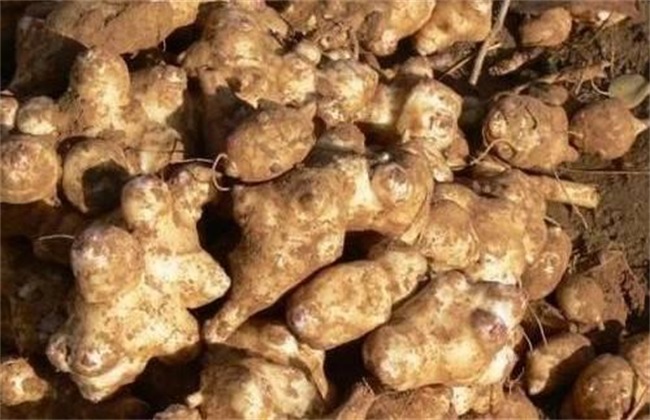
1. Suitable Temperature
Although Jerusalem artichokes grow underground, temperature is the key factor affecting their growth. Their temperature requirements differ at each stage, and if these are not met, growth will naturally slow down, and the final yield will suffer. Under normal conditions, Jerusalem artichokes can sprout and emerge at 6-10°C, but they only expand extremely rapidly at around 20°C, and once the temperature exceeds 30°C, the rate of expansion in the later stage will slow down. If the temperature fluctuates greatly during this period, their growth will also be affected. This is how severely temperature affects Jerusalem artichokes.
2. Sowing
People generally do not pay much attention to sowing Jerusalem artichokes, always thinking it is a task that requires no skill, but in fact sowing is very important. From the spacing between tubers, to the planting depth, to the degree of covering with soil, all of these are quite demanding, and being careless makes it easy to make mistakes, resulting in a low emergence rate. When sowing, the sprouting side should face up, the soil used for covering should be crushed, and the soil does not need to be compacted. These problems are easily overlooked by growers, because once sowing drags on, everyone becomes numb to it and stops paying as much attention as they did at the beginning.
3. Pinching Off the Tops
Growers rarely do this pinching process, and many simply skip it altogether because they feel the labor input and the returns are out of proportion. In fact, after pinching off the tops, Jerusalem artichokes expand faster and grow larger than before, and their quality is better too. So if growers face strong competition, they might as well pinch off the tops to make their Jerusalem artichokes more competitive. If it really feels too troublesome, at the very least the Jerusalem artichokes kept for seed should have their tops pinched off, leaving a good batch of seeds for subsequent planting.
4. Fertilizing in Stages
The fertilization stage is also quite important, but fertilizing cannot be done haphazardly, otherwise it does more harm than good. When fertilizing Jerusalem artichokes, it is important to do it in stages, meaning you must pay special attention to which fertilizer is needed at which stage. Fertilization is mainly concentrated in two stages. One is the seedling growth period, where fertilizing allows them to quickly transition through the growth stage, and nitrogen fertilizer has a particularly obvious effect at this stage. During the expansion period of Jerusalem artichokes, potassium fertilizer is more effective, and this is the second fertilization stage.
The above are the key points for growing Jerusalem artichokes. To grow them well, many issues require careful attention. Growing is about being more meticulous than others, and then your returns may be higher.