What are the control methods for black heart and black skin in radishes
Black heart and black skin in radishes is a common phenomenon during cultivation, seriously affecting the yield and quality of radishes and bringing great losses to farmers. So what causes black heart and black skin in radishes? How should they be controlled? Follow the editor to learn more in detail below.
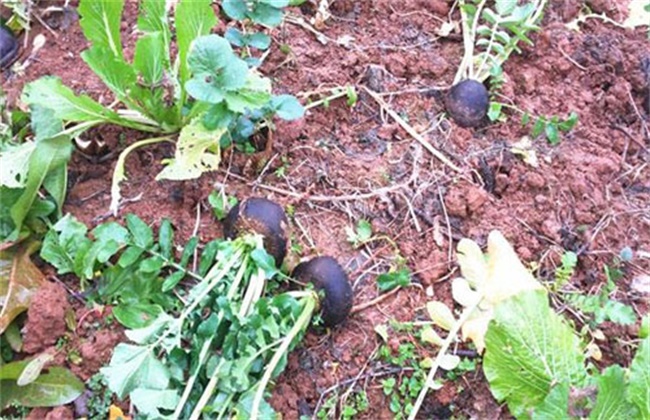
1. Apply sufficient boron fertilizer
The main cause of black heart and black skin in radishes is boron deficiency, and to prevent black heart and black skin caused by boron deficiency, the first step is to apply sufficient base fertilizer. Organic fertilizer not only has complete nutrients but also has a high boron content. It can greatly improve soil structure and physicochemical properties, enhance the soil's water- and fertilizer-holding capacity, and also expand the range of root extension, reduce drought damage, and promote the absorption of boron and other nutrient elements by vegetable crops. Organic fertilizer can be used as base fertilizer or topdressing. The base fertilizer application rate is generally 4000-6000 kg per mu. For topdressing, it is 1000-2000 kg. In plots with severe boron deficiency, 300-400 g of borax can also be applied per mu. During topdressing, it can be applied after mixing evenly with other fertilizers, or foliar spraying can be adopted by spraying a 0.2% boric acid or 0.3% borax aqueous solution.
2. Break up soil compaction
Soil compaction is an important cause of black heart and black skin in radishes. When the soil is hard, compacted and poorly ventilated, and additionally undecomposed organic fertilizer has been applied, microbial activity in the soil becomes intense and consumes too much oxygen, causing oxygen deficiency in the roots and some tissues and resulting in black skin or black heart. The best measure to break up soil compaction is deep plowing and fine harrowing: first plow deeply 18-20 cm, then use a harrow to break up the clods. When there is standing water, it should be drained promptly to prevent soil oxygen deficiency and compaction.
3. Control black rot
When black rot occurs, the leaf veins turn black and form a net-like pattern, and finally the leaves dry up and turn yellow. When the fleshy root of the radish is infected, a cross-section shows the vascular bundles turning blackish brown in a radial pattern, and in severe cases they appear shrunken and hollow. To control black rot, first choose disease-tolerant varieties, and before sowing carry out seed sunning, warm-room soaking and chemical disinfection measures. Before summer sowing, the soil can be deeply plowed and sunned to eliminate pathogenic bacteria in the soil, then some quintozene can be broadcast, and a layer of fine soil can be covered. It can be rotated with non-cruciferous vegetables for 2-3 years, which can effectively control the disease. Strengthen field management, water timely at the seedling stage, properly control seedling growth, promptly pull out diseased plants and remove diseased leaves to reduce opportunities for repeated infection by pathogens. In the early stage of disease onset, pesticides such as agricultural streptomycin sulfate, thiodiazole-copper and quinone fungicides can be sprayed for control.
The above is an introduction to the control methods for black heart and black skin in radishes. We hope it can help you. To learn more related knowledge, please keep following us.