How to prevent and control pumpkin vine rot? These methods you need to know
Pumpkin vine rot is a common phenomenon, and there are many causes of it. Large day-night temperature differences make it easy for a low-temperature, humid environment to form inside greenhouses, which further triggers disease and causes vine rot. Therefore, growers should adopt suitable prevention and control measures according to the specific conditions of the greenhouse to stop pumpkin vine rot. Let's take a look together below.
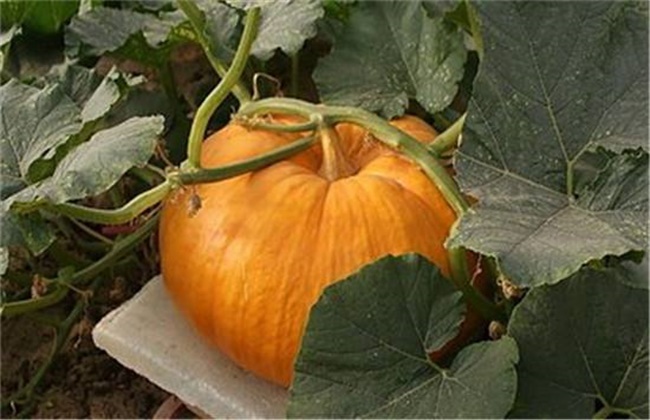
1. Adjust to a suitable environment
First, when daytime temperatures are relatively high, increase ventilation and keep the greenhouse temperature stable at 30 degrees, which helps reduce humidity inside the greenhouse. When temperatures drop in the afternoon, close the greenhouse promptly to prevent nighttime temperatures from being too low. Do not let the day-night temperature difference widen, which would lead to higher humidity in the greenhouse. Second, when daytime temperatures are relatively high, evaporation is also greater, and the plants need more water, so appropriate watering is needed. However, do not water too much at one time, otherwise the plants will release water severely at night, which will further increase humidity inside the greenhouse and cause vine rot.
2. Remove male flowers
Removing male flowers is an important method to prevent vine rot caused by bacterial diseases and gray mold. Because pumpkins mostly use chemical dipping for fruit setting, most male flowers will naturally rot. In addition, there are a large number of male flowers, and after rotting, the male flowers are highly susceptible to bacterial diseases and gray mold, and after infection they spread quickly, causing vine rot. Therefore, male flowers need to be removed in time.
3. Prevent and control diseases
In addition to vine rot caused by gray mold, phytophthora blight and bacterial diseases can also easily cause pumpkin vine rot. After pumpkin stems and vines are infected by phytophthora blight, the diseased parts become sunken and show water-soaked rot, the diseased stems constrict, become thinner and softer, and a white mold layer is produced on the diseased parts. For phytophthora blight, chemicals such as Kelu, Antaisheng, and Anke Manganese Zinc can be chosen for prevention and control. After pumpkins are infected by bacterial diseases, the diseased parts are oval to long spindle-shaped, grayish brown, and sometimes exude amber resinous gum. Jiaruinong can be used for whole-field treatment in the early stage of disease onset, and spraying once more after 3-4 days gives a relatively good effect.
The above is an introduction to prevention and control methods for pumpkin vine rot. I hope it can help you. To learn more related knowledge, please keep following us.