Why Does Water Bamboo Turn Male? Cause Analysis and Control Methods
Water bamboo is a perennial aquatic plant with rhizomes, and it is also a popular aquatic vegetable. During cultivation, plants often grow tall and large but never form the edible gall, which people call "male water bamboo" or "strong water bamboo." Water bamboo turning male can seriously affect water bamboo production, and in severe cases can leave farmers with no harvest at all. So what causes this phenomenon? Let's take a look together.
I. Causes
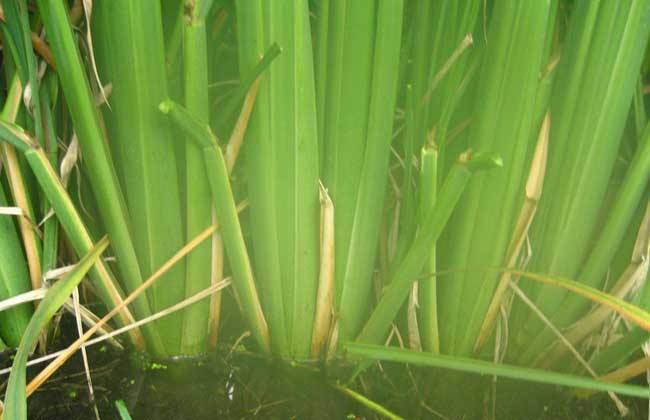
The main reason water bamboo forms "male water bamboo" is that some of its tillers and ramets grow too vigorously and bolt too quickly, so the smut fungus mycelium parasitic at the base of the mother plant's stem cannot enter its upright stem in time. As the upright stem joints and bolts, the flower stem cannot receive the stimulation of hormones secreted by the smut fungus mycelium and cannot expand and fill out normally, meaning it cannot "form the gall" normally and thus becomes male water bamboo. In addition, if male water bamboo is used for propagation, it will only produce new male water bamboo and cannot produce the desired water bamboo.
II. Control Measures
1. The spread of the smut fungus is mainly transmitted from the aboveground main stem of the previous year to the young seedlings. Although the underground stem also spreads it, the transmission rate is extremely low. So if underground stems are used for propagation for many consecutive years, male water bamboo will increase, and eventually the phenomenon of no gall production will appear. Therefore, plants that have formed galls should be selected for propagation, so that the smut fungus can be passed on from generation to generation. If it is a one-season-per-year cultivation method, let the plants wither naturally, and in the second year transplant the young shoots that sprout from within or at the edge of the clump, and the same method can be used afterward. If it is a two-season-per-year cultivation, most of the plants that withered in winter should be dug out, leaving a small portion in the middle, and in the second year at tillering time, transplant the seedlings or divided clumps that sprout from the crooked underground stems; this can both maintain the excellent characteristics and produce more galls.
2. Water bamboo should not be continuously cropped; generally a 3-5 year rotation is suitable. This is an important means of controlling the production of male water bamboo.
3. During field management, male water bamboo should be pulled out promptly, because male water bamboo grows vigorously and its aboveground plants are tall, occupying more space. When the underground stolons grow to more than 1 m, they will seize the space of other plants, not only affecting the growth of surrounding plants, but also possibly being planted as tillers of normal water bamboo the next year.
The above is an introduction to the causes of water bamboo turning male and the control methods. We hope it helps you. To learn more related knowledge, please follow us.