Why Should Wheat Be Controlled from Excessive Growth? A Full Analysis of Causes and Methods
I believe many people are not very familiar with the term "wheat growth control." The literal meaning of wheat growth control is to control excessive wheat growth, so why should excessive wheat growth be controlled? And how should it be done? Let's learn about it together with the editor below.
I. Reasons for Controlling Excessive Growth in Wheat
1. Susceptible to freeze damage in winter and spring
Because excessive growth accelerates the progress of wheat development, making the seedlings grow tender, with many stems, insufficient sugar storage in the tillering nodes, especially after the young spike differentiation enters the double-ridge stage, the cold resistance of wheat is significantly weakened, making it highly susceptible to low-temperature freeze damage in winter and late spring cold damage in spring, ranging from withered leaves and dead tillers in mild cases to frozen spikes and dead seedlings in severe cases.
2. Prone to lodging
The seedlings grow vigorously, with many stems and tillers, large leaves, poor field ventilation and light penetration, tender plants, long basal internodes, thin stem walls, low dry matter accumulation, and poor root development, with few secondary roots and shallow penetration into the soil. If there is more rain in spring or storms occur in the middle and late stages, the roots and stems are highly prone to lodging, causing serious losses.
3. Prone to disease
Under conditions of higher temperatures in autumn and winter, the number of pathogens in the field is relatively large, and the external seedlings themselves are of low quality with insufficient disease resistance. When environmental conditions are suitable, diseases such as sheath blight, powdery mildew, and root rot are highly prone to occur.
II. Methods of Growth Control
1. Growth control by pressing
Pressing has the effect of controlling the aboveground part and promoting the underground part, mainly by bruising the aboveground leaves to delay growth, while also promoting roots to grow deeper into the soil. Pressing can be done with a roller, an oil drum filled with sand, or a rake turned over and run along the wheat rows. Pressing must be done around noon on a sunny day. When pressing, note that wet ground should not be pressed, and it should not be pressed when there is dew or the soil is frozen. When pressing multiple times, keep the direction consistent.
2. Chemical growth control
Spraying chemical additives on wheat can effectively increase the concentration of leaf cell sap, inhibit the elongation of basal internodes, and effectively improve the cold resistance and lodging resistance of wheat.
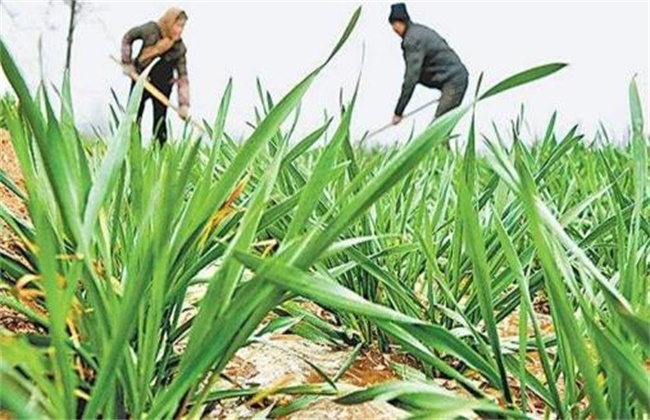
3. Growth control by intertillage
For vigorously growing plots with a large population, deep hoeing to cut roots can be adopted, which can also suppress wheat growth and control excessive growth. Generally, intertillage in wheat fields can preserve and increase temperature and promote root development. After wheat turns green, taking advantage of the gap when temperatures rise, promptly hoe at noon after the soil thaws, thereby cutting fine root tubes, reducing soil moisture evaporation, making the soil compact, mainly preserving soil moisture, effectively raising ground temperature, promoting root development, and also controlling weeds.
The above is an introduction to the causes and methods of controlling excessive growth in wheat. I hope it can help you. To learn more related knowledge, please stay tuned to us.