How to prevent the three hazards during the cotton seedling-raising period? A detailed guide to practical control measures
In the process of cotton cultivation, because of the variety of pests and diseases, control measures need to be well implemented, and during cotton growing there are also the “three hazards”, namely cold damage, waterlogging damage and fertilizer damage. So how should their harm be prevented? Follow the editor to take a look at the prevention methods.
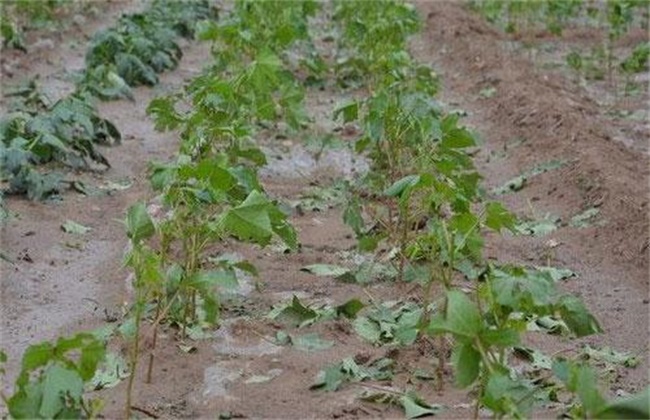
1. Symptoms of cold damage
Cold damage mainly shows as stunted seedling development, small true leaves, cotyledons that fall off very easily, and wrinkled young tender leaves, resembling aphid damage; in severe cases the stems and leaves wither and die in patches. There are mainly three causes: first, sowing blindly too early, so that after emergence the seedlings encounter a cold wave and the temperature drops sharply; second,
removing the plastic insulating film too early; third, uncovering the film during the day and not covering it again in time at night.
Prevention methods: prevent blind sowing, understand the temperature requirements for cotton emergence, and sow at the right time; the minimum temperature for cotton germination is 10.5 degrees, and the emergence temperature is above 12 degrees; second, understand the local climate conditions; generally in the Yangtze River basin in early April the temperature is above 13 degrees, so after a trial sowing you can sow over a large area. At the same time, after emergence, pay attention to uncovering the film early and covering it late, so that when the nutrient-bowl seedlings are not transplanted, the film cannot leave the seedbed.
2. Symptoms of waterlogging damage
First, cotton seedlings turn from white to brown, and finally become brown, and the seedlings grow excessively; second, the seedling stems develop poorly and have poor toughness, making them very prone to damping-off in patches, and they are also easily infected by diseases such as Rhizoctonia solani. The main causes are poor drainage, with water not drained away in time after rain, and also seedbed soil that is relatively clayey and heavy with poor water permeability.
Prevention methods: prepare the cotton seedbed land carefully; the seedbed site chosen must not be continuous cropping, to prevent infection by residual pathogens; also, the drainage system must be kept unobstructed; it is best to apply more organic fertilizer to improve the soil structure, so that spring rain can fall and filter through and the bed dries once the rain stops.
3. Symptoms of fertilizer damage
Fertilizer damage causes cotton seeds to rot after sowing and fail to emerge, and after sprouting it also causes scorching of the radicle and plumule, so the emergence rate is very low; even after emergence it causes root scorching, scorched and withered leaf margins of young leaves, and in severe cases leaf drop and plant death. There are many causes of fertilizer damage: first, a large amount of urea applied in the base fertilizer causes water loss from the cotton seed cells and inhibits the seeds from germinating; second, too much base fertilizer is applied, making the soil solution concentration too high and producing reverse osmosis that damages the seedlings; third, undecomposed organic fertilizer is applied, producing high temperatures during fermentation that burn the seedlings.
Prevention methods: in view of the possible causes of fertilizer damage, adopt targeted preventive measures. First, the organic fertilizer in the base fertilizer must be fully decomposed, which can both prevent high-temperature burning of the seedlings and also prevent weeds and seedlings from competing for water and fertilizer. Second, it is forbidden to use urea as the base fertilizer for the seedbed, so as to avoid seed dehydration and suffocation; when applying chemical fertilizer, keep it at about 0.75 kg per 10 sq m.
The above is an introduction to the preventive measures for the three hazards during the cotton seedling-raising period. I hope it can help you. To learn more related knowledge, please keep following us.