Key points and operation methods of flower dipping technique for greenhouse loofah
Because greenhouse-cultivated loofah grows in a sealed environment with little insect activity, flower dipping technique is mostly used in production to improve fruit set rate and fruit quality and increase returns. However, if the agent concentration is improper or the medication is improper during flower dipping, it may cause fruit deformity. Let's take a look at the loofah flower dipping technique below.
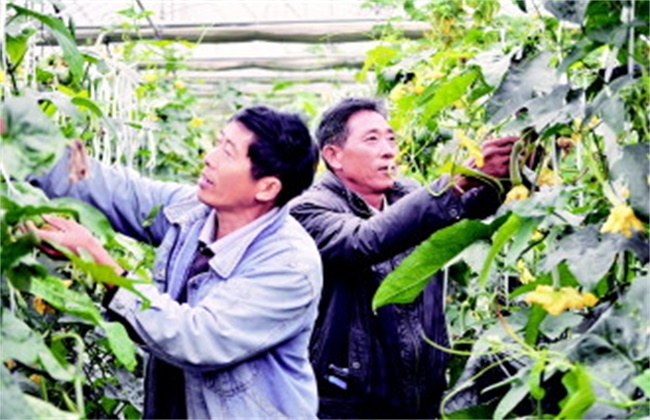
I. Key points of loofah flower dipping
1. Flower dipping method
For loofah flower dipping, it is best to go from bottom to top. The flower dipping part of the young fruit should not exceed two-thirds. If too much is dipped, directly dipping to the root of the young fruit will not only cause the "fruit popping" phenomenon, but the agent will also be conducted through the young fruit to the whole plant, causing hormone poisoning; while if too little is dipped, the loofah is very likely to drop, and its growth will be inhibited.
2. Flower dipping time
Loofah flower dipping is generally done from 10 a.m. to 1 p.m. If the flower dipping time is too early, "dumb" flowers are very likely to appear; if dipped too late, the loofah flowers are likely to drop.
3. Flower dipping concentration
The concentration of the flower dipping agent cannot remain unchanged; it should change with the temperature inside the greenhouse. Generally, when the temperature in the greenhouse is higher, the flower dipping concentration should be lower; when the temperature is too low, the concentration should be higher. In addition, within 3 days after flower dipping, it is best not to water. If watered after flower dipping, it may increase the internal response and cause the "fruit popping" phenomenon.
II. Precautions
1. Prepare and use immediately
For loofah flower dipping, when the liquid fertilizer dose is too large, it will cause dry edges on the loofah, or if the flower dipping agent ratio is unreasonable, or if it is prepared all at once and used multiple times, the petals are very likely to become very thin and become diseased. Therefore, reasonable preparation of the flower dipping agent is the first step to reducing dry edges on loofah. It is recommended to prepare the flower dipping agent and use it immediately.
2. Pay attention to spraying amount and concentration
Many vegetable growers are used to increasing the agent concentration when spraying, which often causes phytotoxicity. Therefore, when vegetable growers choose the agent, they should also note that the agent concentration should not be too high; it is enough to spray the petal surface until moist.
3. The amount of fumigant should not be too large
Fumigation for preventing and controlling loofah diseases is a time-saving and labor-saving method, but the agent dosage and time should be well controlled. Fumigation should be carried out after 9 p.m., and not too early. If used too early, the temperature in the greenhouse is too high, the smoke floats in the air for a long time, and it is easy to reduce the efficacy, while fumigation for too long is very likely to cause phytotoxicity. Generally, fumigation for 8 hours is enough, which can prevent gummy stem blight from harming the flowers.
4. One-time ventilation should not be too large
When ventilating, the method of secondary or multiple ventilation should be used for ventilation and cooling, but many vegetable growers find it troublesome and ventilate too much at one time, which very easily forms the habit of flower flashing. Therefore, flower dipping should be carried out during feeding time, when the wind is relatively small, and flower flashing will not be formed during ventilation.
The above is an introduction to the flower dipping technique for greenhouse loofah. I hope it can help you. To learn more related knowledge, please follow us.