What are the measures for keeping rapeseed seedlings alive through winter? A full breakdown of the key points
Rapeseed is an autumn-sown, winter-grown crop. It has some ability to withstand severe cold, but cold air invasions and improper sowing and fertilizing often cause freezing damage to rapeseed, resulting in yield reductions of varying degrees. Therefore, when rapeseed overwinters, you should take corresponding mature techniques according to local conditions to prevent or reduce freezing damage to rapeseed so it can overwinter safely.
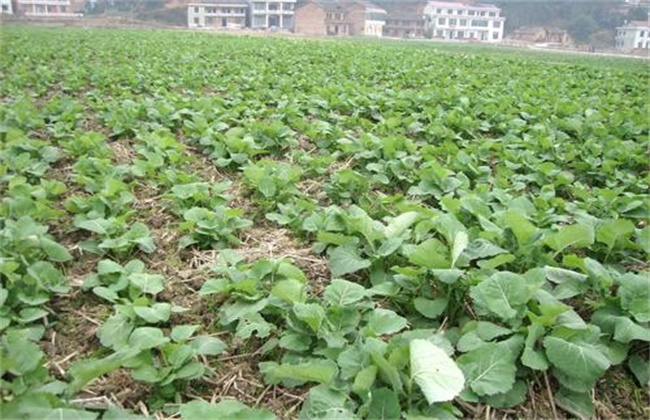
1. Apply more fertilizer
Phosphate fertilizer can promote the growth and development of the rapeseed root system and enhance resistance, while potassium fertilizer can improve rapeseed's cold resistance, disease resistance and lodging resistance. So in winter you can apply some phosphate and potassium fertilizer to rapeseed; this not only promotes the growth of rapeseed but also increases its frost resistance. Before overwintering, you can also use organic fertilizers such as pig and cattle manure and soil-surface ash, and combine this with hilling soil around the roots, which can also increase rapeseed's freeze resistance. The amount of fertilizer should also be controlled well; it should not be applied too much. Generally, applying 2000-3000 kg of farmyard manure per mu, together with 10-15 kg of calcium phosphate and 50-10 kg of potassium chloride, is enough.
2. Intertillage and hilling
During the overwintering period, you can carry out intertillage and loosening of the soil 2-3 times. This can greatly improve the soil structure of the rapeseed field, regulate soil moisture, help fertilizer leach downward, enhance the soil's ability to hold fertilizer and retain heat, help raise soil temperature, prevent plants from lodging, and at the same time reduce weed damage and the harm of sclerotinia. The depth of intertillage should vary according to the growth of the rapeseed. Generally, it is shallow first and then deep. Fields with vigorous growth can be hoed somewhat deeper, while fields with weaker growth should be hoed shallowly.
3. Drainage and irrigation
Before winter, the three ditches should be opened well, and the ditches should be cleared in time to drain the accumulated water in the field, reduce field humidity, promote root growth and development, and help reduce low-temperature freezing damage. Before overwintering, it is necessary to irrigate once with overwintering water, which can stabilize soil temperature, provide sufficient water for rapeseed throughout the overwintering period, and also avoid a large drop in low temperature, alleviate freezing damage, and effectively prevent dry freezing of the soil. When irrigating with sealing-freezing water, it must be irrigated thoroughly, irrigated and drained as you go, and the soil should be kept moist. Sealing-freezing water is suitable in the midday of a sunny day, so as to avoid the soil surface settling down and to ensure that the roots and soil are closely connected.
4. Remedial measures after freezing
After the winter cold wave, you should check the seedlings in time. For rapeseed that shows the phenomenon of roots being pulled out, you should promptly break up the soil and earth up the roots to avoid root breakage and dead seedlings. On rainy and snowy days, accumulated water should be drained in time to prevent water accumulation from hindering root growth and development. At the same time, when thawing, plant ash or burnt soil ash should be spread, and clean water should be sprayed on the leaves in time to ease water imbalance and prevent seedlings from losing water and dying. After the soil thaws, fertilizer should be applied in time to promote branching and increase the fruit-bearing positions. For frozen bolts and leaves, they should be removed in time.
The above is an introduction to measures for keeping rapeseed seedlings alive through winter. I hope it can help you. If you want to learn more related knowledge, please follow us.