What to do about varietal degeneration in yam? Causes and solutions
Yam is rich in nutrients and has a fairly wide growing range, making it a crop of extremely high economic value. In recent years its price has remained relatively stable, but during cultivation, yam's resistance declines, the tubers are small and often deformed, and yields also drop substantially, seriously reducing its commercial value. This is in fact varietal degeneration in yam. What causes varietal degeneration in yam? How should it be prevented and controlled? Follow along with the editor to find out.
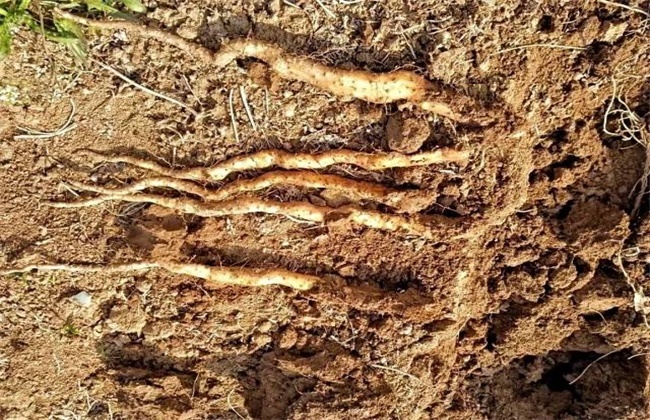
1. Continuous cropping
Yam has a high demand for soil nutrients, and generally after one planting it will absorb the soil nutrients clean, so it cannot be planted continuously; the land needs to rest for several years before it can be planted again. Continuous cropping not only causes nutrient deficiency, but also allows pests and diseases to accumulate in greater numbers. During cultivation, pests and diseases are extremely easy to breed, among which nematodes are especially serious, causing a severe decline in yield and quality.
Solution: Adopt a reasonable crop rotation system, avoid continuous cropping, and eliminate varietal degeneration caused by continuous cropping. For sprouting, seeds can be soaked in carbendazim solution for half an hour, then removed and placed in moist sand to sprout, which serves to disinfect and prevent disease. During the production period, once diseased plants are found, remove them promptly, pulling out the surrounding plants at the same time, and then disinfect the diseased holes with lime.
2. Viruses
Viruses are one of the main causes of varietal degeneration in yam. Viruses lurk in the tubers and plants, and not only spread year after year but also strengthen year by year, causing the plant leaves to curl and wrinkle, with fewer green leaves, so that at a glance everything looks abnormal. Although the plants will not die, the reduction in yield and decline in quality are relatively serious.
Solution: Use virus-free tubers and plants for planting, and likewise before planting, strictly disinfect the seed tubers and plants to kill the pathogens they carry. During production, chemical agents can be used in combination for propagation, which can both prevent and control the occurrence of diseases and maintain the superiority of good varieties, preventing varietal degeneration.
3. Variety mutation
This situation is mostly caused by seed tubers. Among the purchased seed tubers, there are large numbers of mutated seed tubers, and these mutated seed tubers are mixed in with good varieties for propagation, causing varietal degeneration. These situations mostly occur because the facilities of seed tuber propagation bases are inadequate and the breeding procedures are simplified and not in compliance with regulations.
Solution: To avoid this situation, start with the purchase of seed tubers. Seed tuber selection should be carried out through purification and selection of the best, buying certified high-quality seed tubers suitable for your own cultivation, so as to eliminate the problem of varietal degeneration at the source. At the same time, establishing a sound yam good-variety breeding system is the most effective measure to accelerate the promotion of good varieties, maintain varietal characteristics, and prevent varietal degeneration.
The above is an introduction to the causes of varietal degeneration in yam and solutions. We hope it helps you. To learn more related knowledge, please stay tuned to us.