What to Do About Deformed Yams? Cause Analysis and Control Methods
During cultivation of yams, factors such as adverse environment, cultivation methods, and management methods cause changes in the tissue structure of yams during growth, producing various odd shapes, such as branching at the upper end, branching at the lower end, snake shape, flat-head shape, foot shape, gourd shape, etc. These are collectively called deformities. So how should deformed yams be controlled? Let's take a look with the editor.
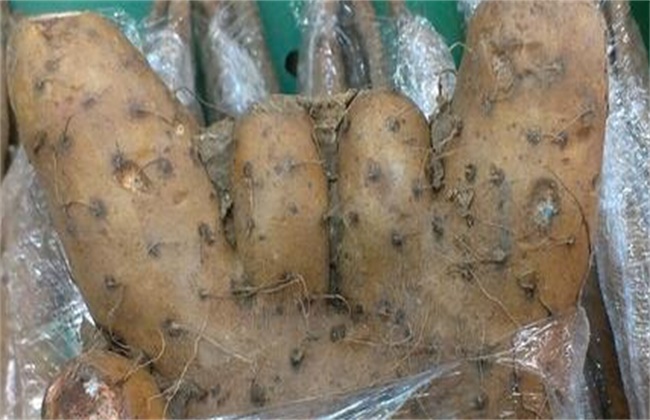
1. Foreign matter in the soil
Yams are suitable for growing in sandy soil. If stones, bricks, and other hard objects are mixed into the soil, the yam tubers will come into contact with these hard objects during growth, the growing points will be blocked, and their growth direction will change, forming deformities such as branching and flat heads.
Control method: Therefore, before planting, foreign matter in the trench must be carefully removed. When digging trenches manually, it should be done before winter, so as to enhance winter and spring rain and snow erosion and freezing weathering, so that the soil is thoroughly crushed. In addition, when backfilling soil, stones, bricks, and other hard objects in the soil must also be carefully removed, and large clods of soil should not be filled into the trench.
2. Blind use of seed fertilizer
When farmers plant yams, in order to make the seedlings strong and grow quickly, they abuse various seed fertilizers after opening the trench and before placing the yam seed pieces for planting. As a result, because too much seed fertilizer is used or it is not fully mixed with the soil, the seed stems come into direct contact with the seed fertilizer, causing the buds and growing points to be burned by the fertilizer, thereby producing deformities.
Control method: The use of seed fertilizer must be reasonable, and the amount must be strictly used according to the packaging instructions. At the same time, attention must be paid to the concentration. After application, it must be fully and evenly mixed to avoid direct contact with the seed stems.
3. Applying undecomposed organic fertilizer
The growth period of yams is relatively poor, and a continuous supply of fertilizer is needed for their growth and development. Therefore, sufficient base fertilizer is applied before planting, and the base fertilizer is generally mainly organic fertilizer, such as barnyard manure, compost, cake fertilizer, etc. If these fertilizers are applied before being fully decomposed, they will produce a large amount of heat during fermentation in the field, thereby burning the root system and causing deformities later.
Control method: When applying organic fertilizers such as barnyard manure, compost, and cake fertilizer, they must first be composted and decomposed in advance before application. Remember not to apply them directly, which would cause root burning. It is recommended that after planting, spread the fertilizer on the bed surface of two yam rows, then rake it once so that the soil and fertilizer are mixed evenly.
4. Damage from underground pests
When planting yams, if insecticides are not spread in the trench to control underground pests, pests such as wireworms, white grubs, mole crickets, and root-knot nematodes will harm the yam tubers throughout the entire growth period, for example by biting off the growing points, causing the yam tubers to fail to elongate normally and causing deformities.
Control method: Underground pests should be controlled promptly and early. Once underground pest damage occurs, chlorpyrifos, abamectin, or phoxim can be chosen for root irrigation control.
The above is an introduction to the causes and control methods of deformed yams. I hope it can help you. To learn more related knowledge, please follow us.