What are the control measures for Angelica root rot?
Root rot of Angelica sinensis (dong quai) is a fungal disease that very easily causes the root system of Angelica to rot, and can even lead to the death of the whole plant, so it is also called "rotten root disease," and it has an enormous impact on farmers' economic returns. So how should Angelica root rot be controlled? Let's take a look together with the editor.
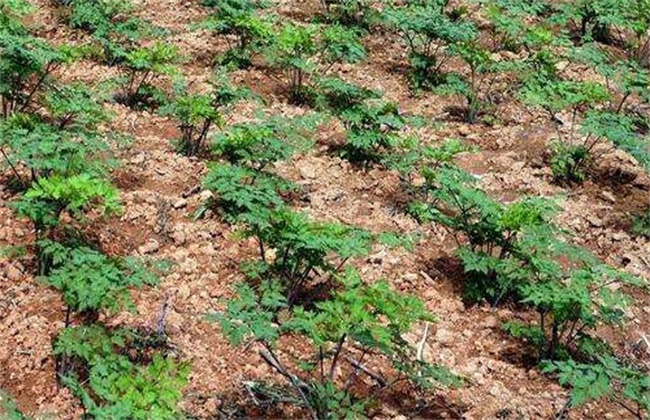
1. Symptoms
Root rot mainly harms the roots and stems of the plant. When the disease occurs, the root part of the plant turns brown, then rots and becomes water-soaked, leaving only a fibrous empty shell; the stem turns brown and water-soaked, and the aboveground parts stop growing, with the plant becoming stunted. Elliptical brown lesions also appear on the leaves, and in severe cases the leaves wither and droop, ultimately causing the entire plant to die. When the disease is severe, the leaves turn yellow and withered, and the root system turns black and rots; at this point the plant can easily be pulled up, and it often occurs mixed together with stem nematodes.
2. Disease pattern
The pathogen overwinters as mycelium and conidia in diseased soil and on seedlings, becoming the primary infection source for the following year. The disease generally begins in May, reaches its peak from July to August, and gradually lessens in September as temperatures drop. The pathogen is mainly concentrated in the plow layer, and a high-temperature, high-humidity environment favors its occurrence. Frequent underground pest activity and numerous root wounds also favor the occurrence of this disease. In addition, excessive irrigation, water accumulation after rain, and poor root development can also worsen the severity of the disease.
3. Control measures
① Select good seedlings
Pathogen-carrying seeds are one of the main sources of the pathogen, so diseased plants should be promptly eliminated when collecting seeds. During winter storage, improper management often promotes the occurrence of the pathogen, so when planting, diseased seedlings should be promptly eliminated.
② Select a good plot
For planting Angelica, sandy soil and a plot with relatively good drainage and water permeability should be chosen. Continuous cropping must not be used, and it is not suitable to rotate with potato, which is susceptible to root rot.
③ High-ridge cultivation
High-ridge cultivation is not prone to water accumulation, and the soil moisture content is moderate with good aeration, forming a soil environment favorable for root growth and unfavorable for the occurrence of the pathogen.
④ Disinfection
The soil can be disinfected before transplanting, and seedlings can also be soaked in 1:150 Bordeaux mixture for 10-15 minutes, then dried and planted. During seedling raising, carbendazim or thiophanate-methyl can be used for seed dressing.
⑤ Chemical control
Once disease is found, promptly pull out and burn the affected plants in a centralized manner. A handful of lime powder can be scattered into the diseased holes, and at the same time the diseased area should be thoroughly sprayed with metalaxyl-hymexazol or zhongshengmycin at 600-1000 times dilution, or 50% metalaxyl plus mancozeb at 800-1000 times dilution, to prevent the disease from spreading.
The above is an introduction to the control measures for Angelica root rot. We hope it can help you. To learn more related knowledge, please stay tuned to us.