What are the control methods for Panax notoginseng anthracnose?
Panax notoginseng anthracnose is a common disease during the cultivation of Panax notoginseng. It has a huge impact on the growth of Panax notoginseng, can harm the leaves, stems and rhizomes of Panax notoginseng, and seriously affects the yield and quality of Panax notoginseng. So how should Panax notoginseng anthracnose be controlled? Let's take a look together.
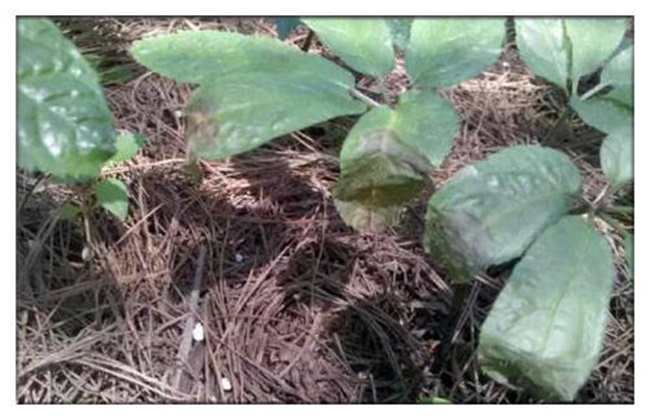
1. Disease symptoms
The leaves, petioles, stems and fruits of Panax notoginseng can all be affected throughout the entire growth period. When seedlings are affected, a reddish-brown diamond-shaped constriction appears at the base of the pseudostem, causing the top to wither and twist. When leaves are damaged, small circular yellow-brown spots first appear scattered on them, then expand into diamond shapes. The edges of the lesions are dark brown, and the centers become necrotic and transparent. When the lesions rupture, they cause holes in the leaves. When stems are damaged, pale bluish circular spots first appear at the affected sites, then spread upward and downward, forming yellow-brown spindle-shaped lesions. In severe cases, the stems shrink and break, but the stems and leaves above the diseased area can still grow for a period of time. The affected parts of the rhizome show dark, irregular lesions. The aboveground parts of the plant wilt, while the leaves remain green. In the later stage, the rhizome rots.
2. Occurrence pattern
The anthracnose fungus overwinters as mycelium remaining in the soil or seeds, and infects under suitable conditions the following year. The pathogen forms conidia, which spread through rain splash or irrigation water and cause secondary infection. The pathogen adapts to a relatively wide temperature range and can cause disease between 25-30 degrees. Generally, the disease spreads rapidly in June-July under high temperature and high humidity. Continuous rainy weather, muggy conditions after rain, and overly dense planting can easily induce an epidemic of this disease.
3. Control methods
Because pathogenic spores can survive in the soil for more than 4 years, the interval between plantings should be controlled at more than 6-8 years, and the crops used for rotation should mainly be those that are not infected by the anthracnose pathogen. For plots where Panax notoginseng has been cultivated, plowing should be carried out after harvest, the number of plowings should be increased, and the ridge-drying time should be extended. After exposure to the sun, some germinating spores can be killed, reducing the number of pathogenic bacteria in the soil. Nitrogen, phosphorus and potassium should be reasonably combined according to the fertilizer requirements of Panax notoginseng. When fertilizing, methods such as small amounts applied multiple times, mixed with soil and broadcast, drip irrigation, and root drenching should be used to achieve balanced fertilization. Before transplanting, it can be soaked for 10 minutes in a 100-fold solution of 40% formalin. When disease occurs, mancozeb or carbendazim can be sprayed, once every 10 days, for 2-3 consecutive sprays.
The above is an introduction to the control methods for Panax notoginseng anthracnose. We hope it can help you. To learn more related knowledge, please stay tuned to us.