Why do tomatoes develop deformed fruit? Causes and solutions
Tomatoes are a common vegetable, and as their planting area keeps expanding, the phenomenon of deformed fruit has become more and more common, becoming an important factor affecting tomato quality and yield. How to prevent and control deformed tomato fruit is also a problem farmers currently need to solve. So what causes deformed tomato fruit? How should it be solved? Let's take a look together with the editor.
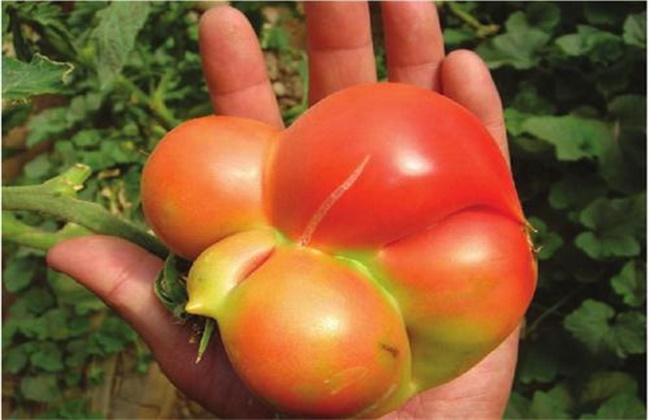
I. Causes of deformed tomato fruit
1. Unsuitable temperature
During the flower bud differentiation stage of tomatoes, temperatures that are too high or too low will affect normal flower bud differentiation. Once early flower bud differentiation is poor, deformed fruit will appear later. For example, in winter, the nighttime temperature during tomato flower bud differentiation must not be lower than 12°C, and in summer, daytime temperatures should not exceed 30°C. However, in summer and autumn, temperatures in many regions are relatively high, and daytime temperatures exceeding 35°C are very normal, thus causing deformation later.
2. Improper flower dipping
If the concentration of the flower-dipping hormone is too high, especially during high-temperature periods, the flower-dipping concentration should be appropriately reduced, otherwise deformed fruit will also form. Or the timing of flower dipping may be unsuitable; for example, dipping too early can easily form stiff fruit, while dipping too late can cause fruit cracking.
3. Nutrient imbalance
The growth and development of tomatoes require many kinds of nutrients. If certain nutrients are lacking, the fruit can also become deformed, especially when medium and trace elements are lacking. For example, calcium deficiency and boron deficiency easily cause deformed flowers and deformed fruit. If vegetative growth is delayed, or if continuous rainy weather occurs during the fruiting period, the plants are very likely to grow excessively, affecting reproductive growth, so that the nutrients needed for flower and fruit growth are insufficient, thus forming deformed fruit.
II. Solutions
1. Control temperature
In particular, pay attention to controlling the temperature inside the greenhouse so that it is not too high and does not exceed 35°C for a long time. Cooling measures such as flood irrigation, pulling shade nets, and spraying cooling agents can be used.
2. Scientific fertilization
In tomato production, fertilizer should be applied reasonably, with emphasis on the application of organic fertilizer, to ensure balanced nutrients. When plants lack trace elements, they can be supplemented by foliar spraying. For example, spraying a low-concentration borax solution during the fruiting period can promote fruit expansion and improve variety and yield.
3. Reasonable use of flower-dipping agents
When dipping flowers, pay attention to the concentration of the flower-dipping agent. As the temperature rises, reduce the concentration of the agent; conversely, when the temperature is lower, the concentration can be appropriately increased. Generally speaking, for flower spotting, the use concentration of 2,4-D is 10~20 ppm, and the higher the cluster of flowers, the lower the concentration of the flower-dipping agent should be.
4. Timely fruit thinning
When deformed fruit is found on the plants, it must be thinned out in time. This is especially true for the first fruit cluster of autumn-delayed cultivation, because high temperatures in the early stage easily form deformed fruit, and the earlier they are thinned out, the better nutrient waste can be prevented. Also, the first fruit cluster should not retain too many fruits; generally 2-3 normal fruits are enough.
The above is an introduction to the causes of deformed tomato fruit and solutions. I hope it can help you. If you want to learn more related knowledge, please follow us.