What are the precautions for watering peppers in winter?
Peppers are a common seasoning vegetable in our daily lives, cultivated all over the country. Compared with other vegetables, they have stricter water requirements and are a crop that is neither drought-tolerant nor waterlogging-tolerant. So how should watering be done when growing them in greenhouses in winter? Follow along with the editor to look at the precautions.
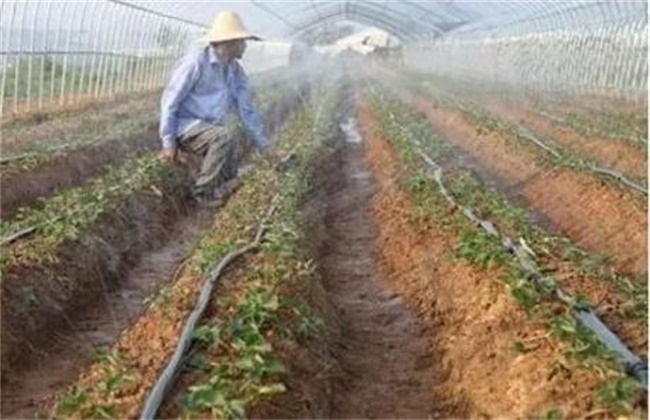
1. Do not water blindly
When growing peppers in winter, the temperature is relatively low, so greenhouses are mostly used. The greenhouse space is relatively closed, and soil moisture evaporates and infiltrates more slowly than in open-field cultivation. Therefore, if too much water is applied, excessive soil moisture will affect the coordination of fertilizer, water, air and heat in the soil. So watering peppers in winter must be determined according to the actual growth condition of the plants and the climate, so as to water reasonably.
2. Avoid watering in the afternoon
When the indoor and outdoor temperatures are both relatively low, it is best to water peppers before 10 a.m., and it is advisable to control the water temperature at around 20 degrees. Watering in the afternoon or evening means the soil temperature cannot be raised, and the humidity inside the greenhouse is relatively high, making it very easy for pests and diseases to occur. Moreover, on the day before each watering, protective pesticides should be sprayed in time. If the second day after watering encounters rainy or snowy weather, smoke agents can be lit for protection.
3. Avoid watering when long cloudy days suddenly turn sunny
There are relatively many cloudy days in winter, and the air temperature and low temperature inside the greenhouse are both relatively low. If it suddenly turns sunny, the air temperature rises relatively quickly, but the soil temperature lags about two hours behind the air temperature in recovering, and at this time root activity is still relatively weak. If a large amount of water is applied at this time, causing the soil temperature to remain too low for a long time, root water uptake will be affected, and peppers are prone to physiological dehydration symptoms.
4. Do not water on low-temperature rainy days
In southern regions, there is rainwater for watering in winter, and at this time both the air temperature and soil temperature drop relatively quickly. If watering is done at this time, it will further lower the air temperature and soil temperature, and will also cause waterlogging that damages the roots and induce pests and diseases, greatly affecting the growth and development of peppers, resulting in reduced yield in mild cases and total crop failure in severe cases.
The above is an introduction to the precautions for watering peppers in winter. I hope it can help you. To learn more related knowledge, please follow us.