What are the key points to note when growing celtuce? Explained clearly in one article
As one of the common crops, celtuce is grown by basically every farmer, but few can grow it well. Growing the same celtuce, the returns of two growers can differ by double, and those with unsatisfactory results mostly failed to pay attention to these details. Let's take a look together below.
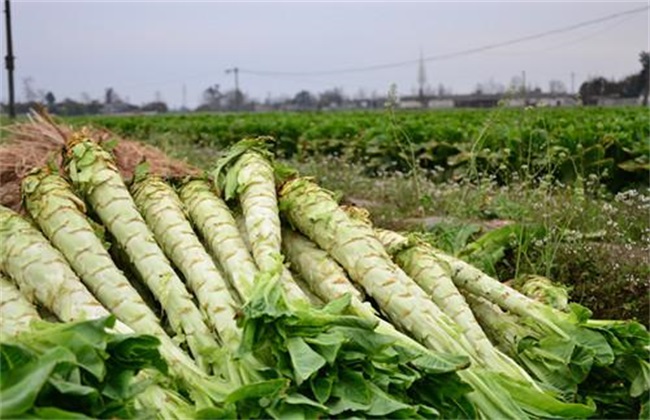
1. Soil permeability
Celtuce is grown mainly for its stem, so the conditions that help its root system grow quickly must be put to good use, and soil permeability is one of the key influencing factors. With good soil aeration, the celtuce will be more active throughout the entire growing cycle, and its root system will naturally grow faster. Second, such soil also favors the swelling of the celtuce, because the soil resistance is smaller, allowing it to grow downward with ease, so it can absorb more nutrients, forming a virtuous cycle.
2. Temperature during the seedling stage
Celtuce does not adapt well to relatively low temperatures, which will stop its growth, and the temperature during the seedling stage is even more important. Many people overlook prolonged low temperatures during the seedling stage, and when the harvest later turns out unsatisfactory, they assume the problem lies elsewhere. Low temperatures during the seedling stage damage the leaf differentiation of celtuce and shorten its vigorous growth period. For example, the vigorous growth period of normal celtuce is about 3 weeks, while for damaged plants it may be only 2 weeks. How could such celtuce possibly grow well in the end? So the temperature must be kept well at this stage, generally maintained at around 20°C.
3. Planting density
Blindly pursuing density is unscientific; even if you manage to grow something, it will basically all be small celtuce, first because of nutrient issues, and second because of growing space issues. When growing celtuce, attention must be paid to the two factors of nutrients and growing space. If space is insufficient, even if the celtuce has sufficient nutrients, its absorption rate will gradually slow down, leading to slower growth. So whether the soil is fertile or not, everyone must pay attention to leaving enough gaps when planting, which also makes management easier.
4. Watering management
The water demand of celtuce is low at first and high later. In the earlier stages, you only need to keep the planting soil from being too dry. As the vigorous growth period arrives, the celtuce will develop and swell rapidly, and its demand for water will grow day by day. At this time, the soil must be kept relatively moist; otherwise, if the dry matter of the celtuce grows too fast and the water cannot keep up, the celtuce will look very shriveled, and its taste will have a relatively strong bitter flavor, affecting everyone's returns.
The above are some of the issues to note when growing celtuce. These details are relatively easy to overlook, so everyone must be careful. Everyone knows how to grow celtuce, but if you want to compare yields, you can only improve them through these details.