Detailed Guide to Winter Carrot Storage Methods
Carrots are a very nutritious vegetable and are grown on a very large area in China. When growing carrots, management work is certainly important, but storage after harvest cannot be ignored either. Especially in the low-temperature environment of winter, if storage work is not done well, it will have a great impact on economic returns. So how should carrots be stored in winter? Let's take a look together with the editor below!
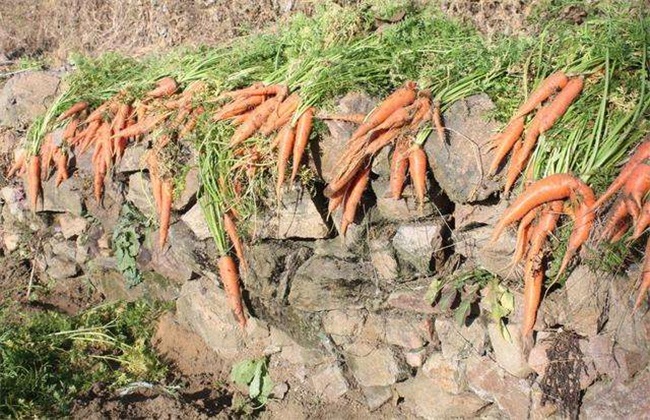
1. Trench storage
When storing carrots in trenches, first dig the storage trench well. The width of the storage trench should be kept at about 1 m. It should not be too wide; if it is too wide, it will affect the temperature, reduce the soil's heat preservation effect, and fail to effectively maintain the temperature inside the trench. The depth should be about 70 cm deeper than the local winter frozen soil layer. Then control the length of the trench well according to the storage amount. During storage, adjust the thickness of the covering soil appropriately according to environmental changes. The storage trench should be chosen in a place with high terrain, a low water table, and strong soil water retention to ensure the storage effect.
The carrots can be spread directly in the trench, with a thickness kept at about 50 cm. To prevent the carrots at the bottom from rotting due to excessive heat, they can be stacked in layers with wet sand, which can improve humidity retention and increase the carbon dioxide content around the carrots. Before putting them into the trench, a layer of fine soil should be spread over the surface of the carrots, and then soil should be added in batches as the temperature drops, mainly to avoid rotting or frost damage. Then pay attention to observing the temperature inside the trench so it can be adjusted in time.
2. Stack storage
Carrots can be stored in loose piles or stacked in cellars or ventilated warehouses. The stacking height should not be too high, generally kept at about 1 m; if it is too high, it can easily cause carrots to rot. To improve ventilation and heat dissipation in pile storage, a ventilation tube should be set up about every 2 m between piles. When storing in stacks, it is best to use wet sandy soil for layer stacking; its effect is far better than loose piling. It can improve moisture retention and carbon dioxide. At the same time, pay attention to the temperature inside the cellar. When it is too low, cover it appropriately with straw curtains to avoid freezing. Finally, check regularly, and if any rotting is found, pick it out promptly.
3. Semi-closed storage method
The semi-closed storage method is also mainly carried out in a ventilated warehouse. First, the carrots should be stacked in the ventilated warehouse into several rectangular stacks. At the beginning of storage or before the warehouse temperature rises, cover the stacks with plastic film. The bottom of the stacks does not need to be lined with film, maintaining a semi-closed state, which can reduce oxygen concentration and prevent carrots from oxidizing. Maintain a high-humidity environment to improve the storage effect of carrots. During storage, the film can be uncovered regularly for ventilation and air exchange to maintain a good environment.
The above is a brief introduction to winter carrot storage methods. That is all for today's introduction. This article is for reference only, and I hope it can be helpful to everyone!