The correct method for storing Chinese cabbage in winter
Chinese cabbage is one of the most commonly eaten vegetables in our daily lives. It has a very large planting area in our country, and the yield of Chinese cabbage is very high. Therefore, after the Chinese cabbage is harvested, if it cannot all be brought to market in time, then the storage work is very important. Especially in winter. So how should Chinese cabbage be stored in winter? Today, the editor will give everyone a brief introduction. Let us take a look below!
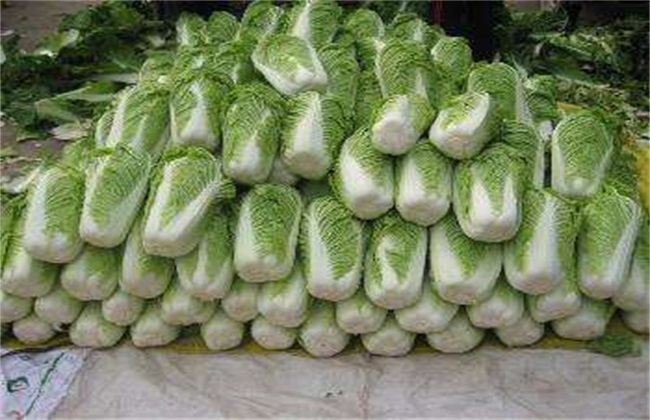
1. Outdoor storage
For outdoor storage, when harvesting the Chinese cabbage, we must first dry it in the sun for about three days. When the outer leaves of the Chinese cabbage gradually wilt and are no longer easy to break, it is ready. Lower it and pile it outdoors, and the temperature should be kept at around zero degrees. If the temperature is below minus five degrees, then an appropriate amount of cold-proof items, such as straw, should be added on top. When piling, a layer of wooden boards should be laid on the ground. Then place the leaf heads facing outward and the roots facing inward and pile them tightly. In the early stage, they should be turned once a week. Peel off the rotten leaves and pick out the diseased plants to avoid rot. If the temperature is too low, for example in most northern regions, outdoor storage is not suitable.
2. Storage in a vegetable cellar
Compared with outdoor storage, storage in a vegetable cellar means we do not need to worry about the temperature problem. However, just like outdoor storage, we must first put the Chinese cabbage outdoors to dry in the sun for about three days, and then remove the yellow and rotten leaves from the Chinese cabbage. Then place them neatly in rows in the vegetable cellar, with the roots facing down, piling them up in a way that is one row of Chinese cabbage and one row of soil. After piling is completed, that is enough. Then seal the entrance of the vegetable cellar tightly to prevent living creatures from entering and biting the Chinese cabbage and reducing its storage quality.
3. Burial storage
Burial storage is also a relatively common storage method for Chinese cabbage in winter. Before burying, first dig the burial trench well, and the Chinese cabbage also needs to be dried in the sun. Then place the sun-dried Chinese cabbage with trimmed roots upright into the burial trench. After it is fully arranged, spread a layer of vegetable leaves or straw over the Chinese cabbage. Then as the temperature drops, an appropriate amount of soil can be added over the covering for insulation. The thickness of the soil covering should be determined according to the region and changes in temperature. The main thing is to ensure that the soil covering will not freeze through in winter. However, because it is buried in a trench, inspection is more troublesome, and it will also be affected by ground temperature.
4. Cold storage
Cold storage can effectively control the storage environment, but compared with the above three methods, the cost consumed is also higher. Cold storage can improve efficiency, and the method of loading into baskets and stacking is adopted. When entering cold storage, attention should be paid to doing it in batches to avoid a rise in temperature and soil causing a decline in storage quality. Sufficient gaps should be kept between each basket and each stack to facilitate inspection during storage. About every three weeks, the cabbage should be turned once. If the storage temperature is regulated by the method of piercing, the purpose of long-term storage can be achieved. Although the cost is relatively high, the storage effect is good and it is simple to operate.
The above is a brief introduction to how Chinese cabbage should be stored in winter. That is all for today's introduction. This article is for reference only, and I hope it can help everyone!