What causes cowpea vine death and how to prevent and control it
At the transition between spring and summer, it is the growing season for cowpeas, and also a season when cowpea vine death occurs frequently, especially prominent in years with excessive rain. Cowpea vine death generally causes a yield reduction of 20%, and in severe cases total crop failure. To ensure high and stable cowpea yields and meet the demand for vegetables, it is necessary to understand the causes of cowpea vine death and take good prevention and control measures.
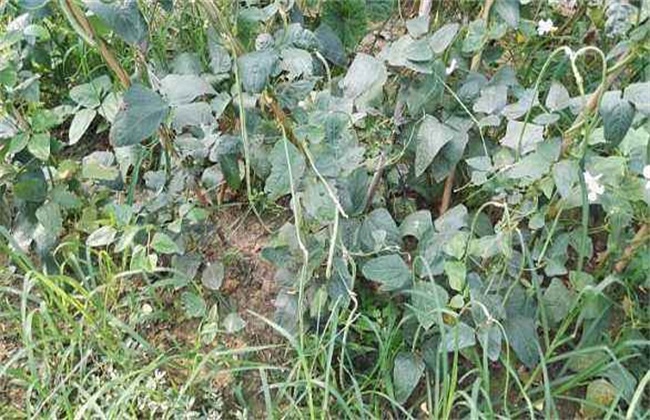
1. Waterlogging damage
Cowpea is a vegetable that likes warmth, tolerates heat and drought but not waterlogging. Excessive rain, poor drainage and standing water in the field can all cause root asphyxiation of cowpea, leading to plant death. The symptoms of vine death mainly manifest as local constriction of the aboveground stems and vines, causing the upper parts to wilt and die; when humid, white mycelium grows on the diseased parts.
Prevention and control methods: Before planting, three ditches need to be opened, namely the surrounding ditch, the middle ditch and the bed ditch, and they must all be connected so that water can be drained promptly after rain to prevent standing water in the field. In addition, for plots with low-lying terrain and poor drainage, the high-ridge cultivation method can be used, which can also very effectively prevent waterlogging damage.
2. Phytophthora blight
Phytophthora blight is extremely prone to occur when the temperature is 25-28°C, during continuous rainy days or when it clears up after rain, and when humidity is relatively high. Plots that are low-lying or have moist soil, high density and poor ventilation and light transmission suffer more severe disease.
Prevention and control methods: First, strengthen cultivation management, plant at a reasonable density, prune branches and remove growing tips, improve field ventilation, and reduce field humidity. When diseased plants are found, remove them promptly to reduce the pathogen population. Then promptly spray Kailu, Previcur and Anke Mancozeb at the early stage of disease, once every 7-10 days, spraying continuously 2-3 times.
3. Fusarium wilt
Fusarium wilt is a soil-borne disease. The pathogen invades from root wounds. The leaves of diseased plants change and drop from bottom to top, cracks sometimes occur at the root crown, and finally the whole plant collapses, wilts and dies. When the stem base of a diseased plant is cut open, the internal vascular bundles are found to be arranged and turned brown; in severe cases the exterior turns dark brown, the roots rot, and when humidity is relatively high, pink mold layers appear on the diseased parts.
Prevention and control methods: First, implement crop rotation with non-legume vegetables for more than three years; then select varieties with strong disease resistance; at the same time, use the idle high-ridge cultivation method, and combined with land preparation, apply 100-150 kg of quicklime per mu for disinfection. Carry out seed coating with chemicals before sowing, and before disease onset, irrigate with thiophanate-methyl and hymexazol for prevention and control.
4. Root rot
It generally occurs during the flowering and pod-setting stage. The leaves of diseased plants turn yellow and dry from top to bottom, and the leaves mostly begin to turn yellow and withered from the leaf margins and do not readily drop. Diseased plants are very easy to pull out, the stem base turns dark brown, lateral roots drop off, the main root rots, and finally the diseased plant dies. When soil moisture is relatively high, pink mold-like substances appear at the stem base of diseased plants.
Prevention and control methods: First, implement crop rotation with Chinese cabbage or onion and garlic crops for more than 2 years; second, drain promptly after rain; third, choose fully decomposed organic fertilizer or Yuzhong brand bio-organic compound fertilizer. After disease onset, promptly use Genfuling for prevention and control, once every 10 days, continuously 2-3 times.
The above is an introduction to the causes of cowpea vine death and prevention and control methods. We hope it can help you. If you want to learn more related knowledge, please follow us.