What are the control methods for cabbage black spot disease?
Cabbage is a vegetable commonly eaten in everyone's daily diet. During production, it is often harmed by pests and diseases, which seriously damages its quality, and black spot disease is one of the more serious ones. So how should cabbage black spot disease be controlled? Follow the editor to learn about it.
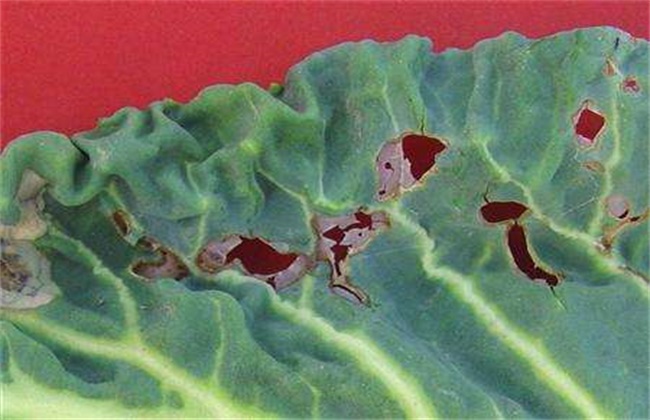
1. Disease damage
Cabbage black spot disease mainly harms the plant leaves, occurring on the outer leaves and outer layer of head leaves. In the early stage of the disease, small dark brown spots appear, gradually expanding, and the spot surface has concentric rings, with darker edges and an obvious yellow halo on the outer periphery. When humid, a black mold layer forms on the lesions. The lesions can reach 4-10 mm in diameter, or even larger. In severe cases, the lesions are densely distributed on the leaves, and sometimes several lesions merge into large patches. The lesions very easily rupture or fall off, forming normal-looking holes. Lesions on the leaf stalks are oval or nearly spindle-shaped, slightly sunken, and the spot surface also has concentric rings and long black mold.
2. Causes of occurrence
This disease is mainly caused by infection by Alternaria brassicae. The pathogen overwinters as mycelium and conidia on seed plants, soil, seed surfaces, and diseased plant residues. It becomes the primary infection source for the next year, and the conidia produced by the overwintering pathogen the following year infect and cause damage. After the disease occurs, the conidia produced on the diseased parts spread by wind and rain, causing repeated infection and leading to the expansion and spread of the disease. At a temperature of 17°C and relative humidity of 75%-85%, it is favorable for pathogen infection and disease occurrence.
3. Control methods
① Agricultural control
Before sowing, the seeds must be disinfected. After harvest, clean the field and deeply plow the soil. In severely affected plots, rotation with non-cruciferous vegetables for more than two years can be carried out. Use soil testing and formula fertilization, pay attention to the effective use of nitrogen, phosphorus, and potassium compound fertilizer, and enhance the plant's disease resistance. During cultivation, high-ridge cultivation can be used to improve the soil's heat absorption and moisture conservation capacity.
② Chemical control
In the early stage of the disease, you can use dexon, chlorothalonil, captan, mancozeb, and iprodione, spraying water at the end of each interval. To ensure the control effect, brassinolide regulator can be added, which can save pesticide and achieve the effect of reducing pesticide without reducing effectiveness.
The above is an introduction to the control methods for cabbage black spot disease. I hope it can help you. To learn more related knowledge, please follow us.