How to Grow Bottle Gourd? A Complete Guide to Bottle Gourd Cultivation Techniques
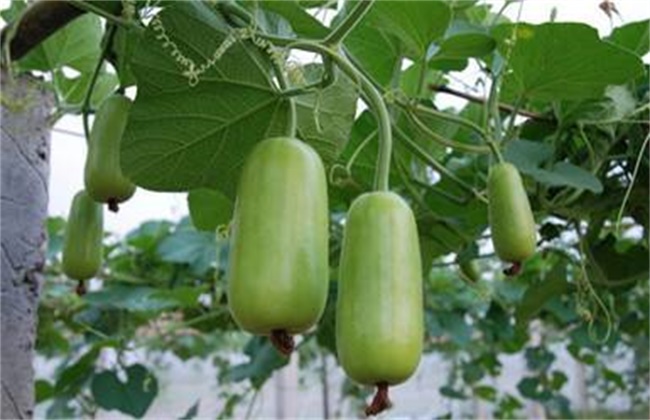
Bottle gourd, also known as calabash or hu gua, is an annual herbaceous plant of the Cucurbitaceae family, the same family and genus as zucchini, but it is not zucchini. It contains protein and various trace elements, which help strengthen the body's immune function. So how do you grow bottle gourd? Let's take a look together with the editor.
1. Land Preparation and Fertilization
Choose a plot with loose, fertile soil, rich in humus, strong water and fertilizer retention, and good drainage and irrigation. Before planting, deep-plow the soil, and while preparing the land, build raised beds and apply sufficient base fertilizer all at once to provide ample nutrients for the growth and development of bottle gourd. Generally, apply 1500 kg of decomposed farmyard manure, 25 kg of superphosphate, and 100 kg of compound fertilizer per mu.
2. Sowing and Seedling Raising
In the south, you can use greenhouses from December to January, or grow in the open field in early spring from February to March, raising seedlings in greenhouses or small arch sheds; alternatively, for late-autumn cultivation in August to September, raise seedlings under shade nets. During the seedling period, control temperature and moisture to prevent the seedlings from growing leggy and to cultivate strong seedlings. When the seedlings grow to 2-3 true leaves, they can be transplanted. In early spring, when temperatures are low, transplanting should be done on a sunny afternoon. Generally, plant 2500-2700 plants per mu under protected cultivation, while in open-field cultivation, plant about 1600-1900 plants per mu.
3. Field Management
When the bottle gourd vines grow to 30-40 cm, set up trellises promptly and guide the vines. For protected cultivation in early spring, since there is no insect activity, supplemental pollination should be carried out. The best time for pollination is from 5 to 8 PM. Pick fresh male flowers that opened that day, remove the petals, and evenly smear the pollen onto the stigma of the female flowers. After pinching off the growing tip, more lateral vines will develop; keep 2-3 vigorous lateral vines on the trellis and prune the excess lateral vines to avoid ineffective nutrient consumption by the plant.
4. Fertilizer and Water Management
Topdressing should be determined according to the plant's growth. If the plant is growing vigorously and the base fertilizer is sufficient, the number of topdressings can be reduced accordingly or omitted; but if the plant is growing weakly, topdressing should be applied promptly. After transplanting and establishment, apply a seedling-promoting fertilizer once; after pinching off the growing tip, apply a lateral vine fertilizer once; at the beginning of fruit swelling, apply a fruit fertilizer once; and apply fertilizer once after every 2-3 harvests. For topdressing, use 50 kg of dilute human and animal manure plus 100 g of urea or a low-concentration compound fertilizer solution per mu, alternating between them. You can also apply foliar fertilizer according to the plant's condition to supplement nutrients and improve resistance. When watering, note that bottle gourd is neither drought-tolerant nor tolerant of waterlogging, so never flood-irrigate, and drain accumulated water promptly.
The above is an introduction to bottle gourd cultivation techniques. We hope it helps you. To learn more related knowledge, please stay tuned to us.