How to prevent leggy cotton seedlings? These methods you need to know
Cotton is grown all over China, and its cultivation history in China is very long. However, when we grow cotton, if management is improper, some problems will often occur. Leggy seedlings are one of them, and leggy cotton seedlings can seriously affect the yield and quality of cotton. So how should we prevent leggy cotton seedlings? Below, the editor will give you a brief introduction. Let's take a look!
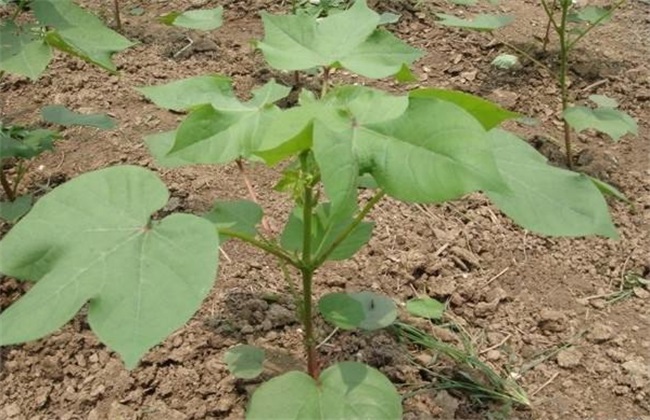
1. Timely chemical regulation
When we grow cotton, we generally need to carry out chemical regulation about twice during the cotton seedling stage. The first time should be done at the cotyledon stage, mainly to thicken the roots and avoid the phenomenon of uneven seedling sizes in cotton. After the cotton seedlings emerge uniformly, an appropriate spray of mepiquat chloride can be applied once to promote the growth of cotton seedlings. Then, when the cotton seedlings grow two true leaves, carry out the second chemical regulation. At this time, cotton is very sensitive to mepiquat chloride, so the dosage should be appropriately reduced. At this stage, chemical regulation is mainly to promote flower bud differentiation in cotton and advance the time of budding.
2. Proper intertillage
If we want to prevent the phenomenon of leggy cotton seedlings, we also need to do a good job of intertillage. Through intertillage, we can make the soil tillage layer looser. This creates a suitable growing environment for the growth of cotton plants. By controlling temperature, light, moisture, and other factors well, we can speed up the evaporation of soil moisture, and we can also prune part of the plant's root system. This inhibits the growth of cotton stems and leaves and avoids the formation of leggy seedlings.
3. Timely earthing up
Proper earthing up can create a good growing environment for the cotton roots. It improves soil permeability and is very beneficial for stimulating new roots. This is because earthing up can prevent the soil from becoming too saline-alkaline, raise soil temperature, promote the growth of cotton roots, and ensure that cotton seedlings grow steadily. The time for earthing up is generally around May each year, and it should not be too early or too late. If it is too early, the soil is too alkaline, and the seedling survival rate is low; if it is too late, the soil loses moisture severely, the soil temperature is insufficient, and cotton seedlings emerge slowly, thus forming leggy seedlings.
4. Fertilizing to promote seedlings
Leggy seedlings are actually a type of weak seedling, so at this time promoting seedling growth is very important. Generally, after each intertillage, an appropriate amount of monopotassium phosphate, urea, and other fertilizers can be sprayed per mu. At the same time, an appropriate amount of growth regulators such as brassinolide can also be added. In particular, note that supplemental fertilization should be carried out before the cotton seedlings grow three true leaves. If potassium fertilizer is lacking during the cotton seedling stage, it will affect cotton photosynthesis, causing seedlings to be prone to disease and root rot. Finally, we also need to do a good job in controlling cotton thrips to avoid pests and diseases harming the growth of cotton seedlings.
The above is a brief introduction to how to prevent leggy cotton seedlings. That is all for today's introduction. This article is for reference only, and we hope it can help everyone!