What are the control methods for cucumber whitefly?
Cucumber whitefly is a pest that harms cucumbers, causing symptoms such as leaf discoloration, yellowing, and wilting, and in severe cases, plant death. Therefore, growers must do a good job of controlling cucumber whitefly. Let's take a look at the control techniques for whitefly together with the editor below.
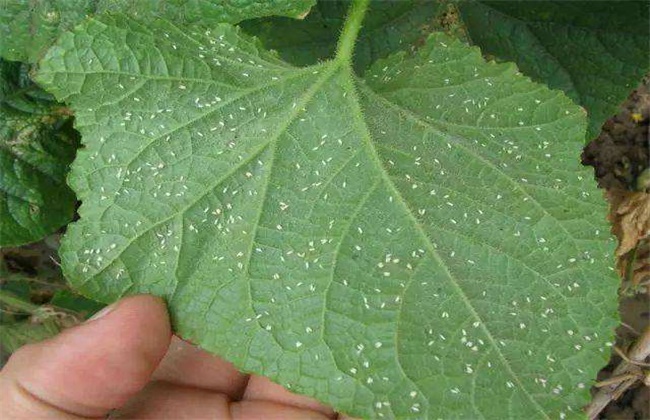
1. Habits and symptoms
Adult whiteflies have a strong taxis toward yellow, but avoid white and silver-white. In the field, they first appear in small spots, then gradually spread, and the insect population density in the field becomes evenly distributed. Adults like to gather on the backs of tender leaves in the upper part of the plant and lay eggs there, which are not easy to fall off. As the plant grows, adults continuously move to upper leaves, so a certain pattern emerges: the uppermost tender leaves have the most adults and newly laid pale yellow eggs; leaves slightly lower down mostly have dark brown eggs; further down are successively first-instar nymphs, older nymphs, and pupae. Adults and nymphs gather on the undersides of leaves, sucking leaf sap, causing leaves to lose green and wither, fruit to become deformed and stiff, and plants to age prematurely. In addition, they secrete large amounts of honeydew, contaminating leaves and fruit, often causing large areas of sooty mold.
2. Agricultural control
The previous crop should be vegetables that whitefly does not like to eat, such as celery, yellow garlic sprouts, and other low-temperature-tolerant vegetables, which can reduce the source of insects. At the same time, cultivate disease- and insect-free seedlings, separate the seedling-raising area from the planting area, fumigate to kill insects before sowing, remove diseased residues and weeds, and set up insect-proof nets at ventilation openings to prevent external insect sources from invading. In addition, the natural enemy of whitefly, Encarsia formosa, can be artificially bred in the greenhouse, which can also effectively control whitefly.
3. Physical control
Whitefly has a tendency toward yellow, so yellow boards can be set up in the greenhouse to trap and kill adults. Use yellow boards of appropriate size, coat them with yellow paint, and then apply a layer of machine oil on top. Generally, 30-40 boards per mu is sufficient, and they generally need to be recoated every 7-10 days. This can effectively control adult whiteflies and inhibit their reproduction.
4. Chemical control
Whitefly has the characteristics of small size, large numbers, rapid reproduction, and wide damage. Once it occurs, it is extremely difficult to control, so frequent inspection is needed, with prevention as the main approach, and continuous control without interruption to achieve good results. In the early stage of occurrence, frequent inspection can be used, with prevention as the main approach, and continuous control without interruption to achieve good results. Buprofezin, propargite, and pirimicarb, etc., can be sprayed for control, generally once every 5-7 days, with 2-3 consecutive sprays. Dichlorvos fumigation can also be used: pour dichlorvos onto wheat straw piles scattered in different sections of the greenhouse, light them, and keep the greenhouse sealed for 1 night.
The above is an introduction to the control methods for cucumber whitefly. We hope it helps you. If you want to learn more related knowledge, please stay tuned to us.