How to prevent and control garlic replant disease? A full analysis of practical methods
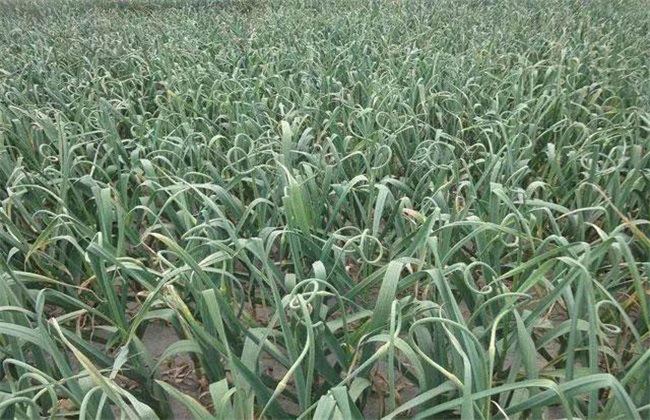
Garlic is grown on a fairly large area in every region of our country. Garlic cultivation is relatively simple, and the yield is fairly high. However, when many farmers grow garlic, replant harm occurs because of continuous cropping. Garlic replant disease has a very large impact on its yield and growth. So when we grow garlic, how should we prevent and control garlic replant disease? Below, the editor will give a brief introduction for everyone, let's take a look together!
1. Crop rotation and deep plowing
If you want to prevent and control garlic replant disease, then crop rotation is certainly the simplest and most effective method. When growing garlic, we should rotate it with vegetables such as celery and cabbage. If the disease is severe, then at least 2-3 years of changing the crop must pass before garlic can be planted again; planting in wide strips and intercropping some overwintering vegetables can also achieve the effect of rotation and crop change. Then we must also do a good job of deep plowing, breaking through the plow pan of the soil, and the depth of deep plowing should be kept at about 25cm. Then finely prepare the land, improve the activation degree of the soil, and reduce the base number of pathogens and insect eggs in the soil.
2. Reasonable fertilization
Reasonably increasing the application of organic fertilizer and returning straw to the field can also effectively prevent and control the harm of garlic replant disease. For garlic, about 5000kg of high-quality farmyard manure should be applied per mu, together with an appropriate amount of chicken and duck manure and grain straw, etc. In this way, the soil structure can be effectively improved and the soil's water- and fertilizer-holding capacity can be increased. When fertilizing, it is best to be able to carry out soil testing and formula fertilization. By examining the nutrient structure of the soil and according to the nutrient content of the soil, supplement the nutrients the soil lacks, use chemical fertilizers reasonably and scientifically, and reduce the harm of garlic replant disease.
3. Increase the application of biological bacterial fertilizer
Biological bacterial fertilizer is very beneficial to the growth of garlic. Because after biological bacteria enter the soil, they will compete with pathogenic bacteria for growth nutrients and space, and antagonism will occur between them. Therefore, it can also effectively reduce the number of pathogenic bacteria in the soil. Keep microorganisms, soil, etc. in a balanced state with the roots of garlic. The organic matter in biological bacterial fertilizer can also increase the organic matter content in the soil, improve the granular structure in the soil, and improve soil permeability. It provides sufficient nutrients for the growth of microorganisms and promotes the growth and reproduction of microorganisms.
4. Chemical control
Before sowing garlic, we should carry out seed dressing, disinfection and germination acceleration for the garlic seeds. Duoning powder can be mixed with water and then thoroughly and evenly stirred with the seeds, and after piling and covering them for about 6 hours, sowing can be carried out. Then we should also mix carbendazim and Duoning powder with fine soil, and evenly scatter the fine soil over the surface before sowing. In addition, during planting we should also carry out targeted pesticide control according to the type of disease in the replant field. For example, if leaf blight occurs, chlorothalonil can be used for control, etc., to ensure the healthy growth of garlic.
The above is a brief introduction to how to prevent and control garlic replant disease. That is all for today's introduction. This article is for reference only, and we hope it can help everyone!