What are the key points to note when growing okra? One article explains the key points clearly
Okra is one of the more popular vegetables today. In recent years this industry has developed rapidly, and the number of people taking part in growing it has been rising day by day. As a well-known high-quality vegetable, its growing techniques also need to be studied carefully. Below are several issues to note about growing okra, to help everyone improve growing returns.
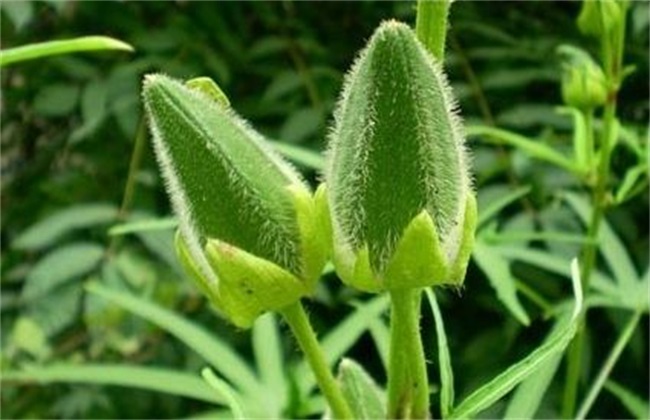
1. Avoid continuous cropping
Many growers may not know that okra is actually a vegetable not well suited to continuous cropping. Okra's root system is very well developed, and with every cultivation a large number of fine roots remain in the soil and cannot be cleared away. Continuous cropping greatly increases the chance of disease in its root system, and secondly the returns from growing it will also be somewhat lower than the previous year. If yields fall after continuous cropping, then it is best to switch to growing another vegetable for a period. For the newly switched variety, it is best to choose one with a shallower root system, so the soil recovers faster.
2. Temperature control
Okra is a relatively warm-loving crop and likes a warm, humid environment, so the control of temperature is also fairly demanding. Generally speaking, 25-30°C is the most suitable for okra growth; in this temperature range the plants are most active and all kinds of effects will be more pronounced. At night, as long as the temperature stays above 15°C, its growth will not run into any problems. If the day-night temperature difference is large, then more soil should be mounded up around the okra's root area to ensure there are no problems at night and to provide proper insulation.
3. Pay attention to planting density
The level of density has a fairly large bearing on okra's successive growth; okra with plenty of sunlight grows very fast. While growing, okra does not only grow upward; in order to obtain more sunlight, okra spreads wildly in all directions, leaving the surrounding okra unable to enjoy sunlight. So when planting okra, density must be paid attention to; do not plant too densely, otherwise the okra with poor growth will slowly wither in the end, and even if it does not wither, it will basically produce no fruit.
4. Do a good job of water management
Okra likes a humid environment, but humid does not equal waterlogged, and this is where many growers easily get carried away. Okra's root system is very well developed, and it is these roots that let okra quickly absorb all kinds of nutrients and water, which is why okra's demand for water is relatively large and why it likes moist soil. But water must not accumulate in the soil, otherwise it is extremely easy to cause water rot. When watering, it is generally recommended to do so earlier; okra is relatively less active at night, and its demand for water drops a lot.
The above are some of the issues to note when growing okra. Okra itself is good in both nutritional value and economic value, but when growing it you must pay more attention to these issues, because they are closely tied to its growth.