How to control downy mildew in Chinese kale? Read this article to understand the control measures
Downy mildew in Chinese kale is a major disease in Chinese kale production. It is widely distributed and commonly occurs. Generally, disease symptoms can reach 20%, and in severe cases the entire greenhouse is affected, causing total crop loss. It can also harm other cruciferous crops, so how should downy mildew in Chinese kale be controlled? Let's take a look together.
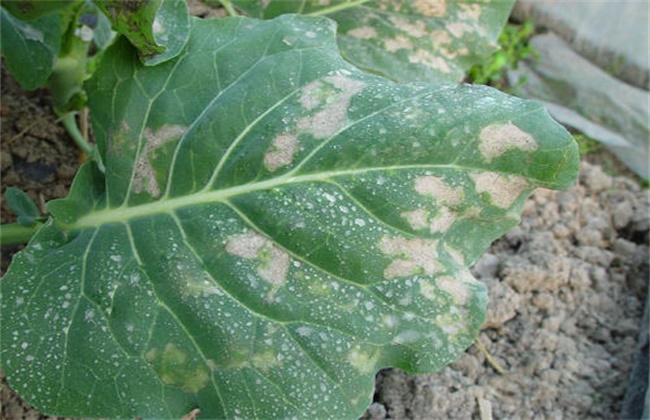
1. Occurrence symptoms
This disease occurs at all growth stages of Chinese kale, with more severe occurrence at the seedling stage. It mainly infects leaves. When it occurs at the seedling stage, white frost-like mold appears on the underside of the leaves, and the seedlings turn yellow and die. When it occurs in adult plants, the lesions on the upper side of the leaves are initially pale green to yellow-white, then gradually become light brown irregular necrotic spots; the underside of the leaves initially shows small gray-brown spots, which become water-soaked under high humidity, or gradually expand into irregular gray-brown to gray-white sunken spots. The pathogen sometimes also invades the stems, and during storage it can also invade the leaf heads, causing yellow irregular necrotic spots, and the leaves dry up and fall off.
2. Occurrence pattern
The pathogen has no obvious overwintering period. It mainly overwinters as mycelium on diseased residues or other hosts in winter, or hides on other cruciferous vegetables, and can also overwinter in the soil in spore form. After temperatures rise the following year, it germinates and infects, and after disease occurs it produces spores that cause secondary infection. In addition, seeds can also carry the pathogen and infect seedlings after sowing. After infection, the pathogen produces a large number of sporangia, which spread in the field through rain, wind, and airflow, causing the pathogen to expand and spread.
3. Agricultural methods
① Choose disease-resistant varieties
Choose disease-resistant varieties according to local conditions, such as Zhonghua Chinese kale and Lubao Chinese kale, which have strong resistance to downy mildew.
② Choose suitable plots
Before planting, it is advisable to choose plots with deep soil, high and well-drained terrain, convenient irrigation and drainage, and rich organic matter. Practice a 2-3 year rotation with cruciferous crops, preferably paddy-upland rotation, which can effectively reduce disease occurrence.
③ Seed treatment
Use seeds from disease-free plants and disinfect the seeds. Before sowing, treat the seeds with thiram or chlorothalonil, which can provide an excellent sterilizing effect.
④ Clean the field in time
After harvest, clean the field in time, take diseased leaves and diseased residues out of the field, and deeply plow the soil to reduce the source of inoculum in the field. This is even more important for seed-production fields.
4. Chemical control
Do a good job of disease forecasting. At the early stage of disease onset or when central diseased plants appear, spray immediately for control. Available agents include chlorothalonil, yishuangling, anilazine, zineb, aluminum ethylphosphonate, and sandofan. Use the above agents alternately, spray evenly and thoroughly. Pesticides are prohibited 15 days before harvest. In protected cultivation, chlorothalonil smoke agents can be used; close doors and windows when smoking.
The above is an introduction to the control measures for downy mildew in Chinese kale. We hope it helps you. To learn more related knowledge, please follow us.