What causes yellow leaves in peanuts?
Peanut is a common food crop in China and also a major oilseed crop in the country. It has a very wide planting area in China, and peanut cultivation techniques are simple with relatively high yields, making it popular among many growers. However, many people often encounter the phenomenon of yellow leaves when growing peanuts, which affects the normal growth of peanuts. So what is the reason for yellow leaves in peanuts? Let's take a look together below!
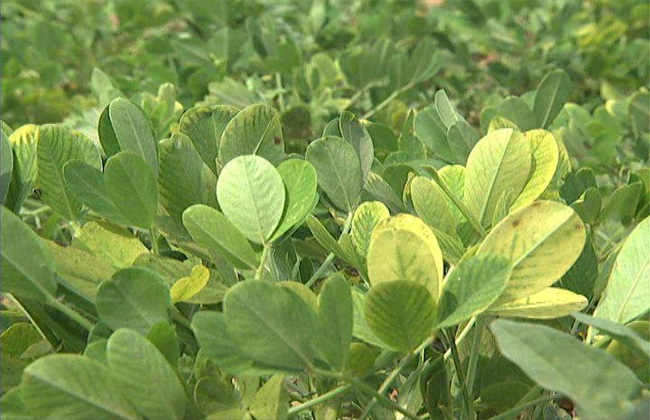
1. Yellowing of peanuts at field edges
In many cases, yellow leaves in peanuts mainly appear at the edges of fields. The main cause of yellowing at field edges is that when large machinery such as harvesters and seeders are working, the areas they roll over show more severe yellowing. This is because after the soil is compacted, it becomes relatively hard, soil permeability deteriorates, and the roots can only carry out anaerobic respiration. Combined with high temperatures, the transpiration of peanuts is also high, and with insufficient nutrients and the inability to absorb nutrients, yellow leaves result. Therefore, we should pay attention to intertillage and loosening the soil to improve soil permeability and allow the roots to develop normally.
2. Yellowing of individual seedlings
In addition to yellowing at field edges, peanuts are also prone to the phenomenon of individual seedlings turning yellow. This may be caused by relatively poor quality peanut seeds, leading to weak seedling growth and susceptibility to nutrient deficiency. Moreover, many growers generally save their own seeds, and the seeds have relatively high moisture content during storage, so after sowing they are more prone to yellow leaves, and in severe cases can even cause seed rot. Alternatively, it may be caused by sowing too deep, which usually occurs with peanut crops following wheat. Therefore, we should not only select high-quality peanut seeds and maintain a dry storage environment. When sowing, we should also control the sowing depth well and not sow too deep.
3. Excessive moisture
Many growers like to use flood irrigation when watering peanuts. Excessive moisture reduces soil permeability, leading to insufficient oxygen, and the ground temperature will also drop sharply as a result. The roots basically cannot breathe, which affects the nutrient absorption of peanuts. This leads to the loss of nutrients in the soil, or if there is heavy rain and drainage is not timely, it causes water accumulation in the soil. Especially in low-lying plots, excessive moisture can easily cause soil waterlogging. This causes large-scale yellowing of peanut leaves, so everyone must pay attention to controlling the amount of watering, not watering too much, to ensure normal growth of peanuts.
4. Physiological nutrient deficiency
The situations mentioned above, such as high soil moisture and soil compaction, will inhibit the nutrient absorption of peanuts. This leads to yellowing and whitening of peanut plants, and in severe cases can cause seedling death. Therefore, we should pay attention to supplementing nutrients to meet the nutritional needs of peanut plants. If a single fertilizer is applied excessively, peanuts will develop yellow leaves due to nutrient deficiency. This is especially true with high-nitrogen fertilizer; the more high-nitrogen fertilizer applied, the more severe the yellowing of peanut leaves will be. At the same time, the lack of trace elements such as iron, zinc, and sulfur will also aggravate the yellowing phenomenon.
The above is a brief introduction to what causes yellow leaves in peanuts. That's all for today's introduction. This article is for reference only, and I hope it can help everyone!