What are the transplanting techniques and seed-saving key points for zhaicai (tuber mustard)?
Zhaicai is a type of mustard. The mustard we are familiar with generally refers to leaf mustard, such as jiutoujie, xuelihong, and zhuxuejie, but there are actually other types of mustard: one is grown for its modified stem, which is zhaicai (tuber mustard), and another is grown for its modified buds, such as ercai (baby mustard). In daily life, the zhaicai we eat is mostly processed, with a crisp and tender taste and a distinctive flavor. So how should zhaicai be transplanted and seed-saving done? Let's learn about it together.
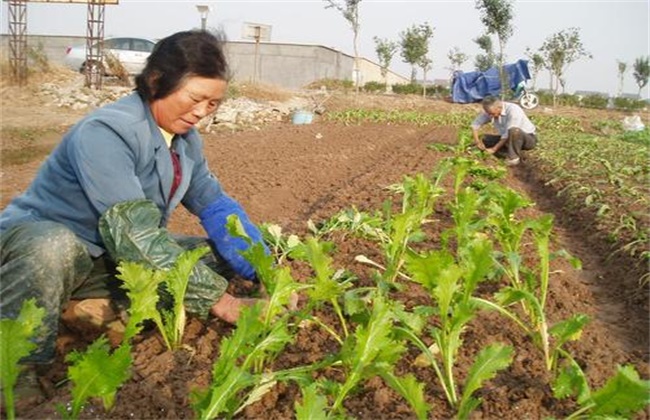
I. Transplanting zhaicai
1. Before planting zhaicai, basal fertilizer needs to be applied deeply. Many farmers often apply basal fertilizer only after raking before transplanting. Doing so causes the fertilizer to be exposed to the air and lost after sun and rain, greatly reducing fertilizer use efficiency. Therefore, zhaicai basal fertilizer must be applied before land preparation to ensure the basal fertilizer is fully absorbed and utilized.
2. When lifting seedlings for transplanting, first carry out a preventive treatment on the seedling bed, so as to ensure the seedlings are transplanted into the field healthily.
3. In addition, to avoid damaging the root system when lifting seedlings, the seedling bed needs to be watered and moistened before lifting, so that fewer roots are damaged during lifting and the transplanting survival rate is improved.
4. Many farmers, in order to increase yield when transplanting, often plant densely. This results in poor field ventilation and permeability, and instead causes yield to decline. The most suitable density for zhaicai transplanting is 20,000-22,000 plants per mu, that is, transplanting with a plant spacing of 12 cm and a row spacing of about 25 cm.
5. After transplanting, apply root-setting fertilizer well. If transplanted on a given day, fertilizer must be applied that same day, to ensure full and strong seedlings after transplanting.
II. Seed saving
1. Remove inferior and off-type plants
For the seed-saving bed, only retain plants with a good corm shape, the characteristics and traits of the variety, robust growth, no pests or diseases, and uniform bolting; remove all off-type and inferior plants that do not meet the standard.
2. Pinching
10-15 days after flowering, pinch off the tips of the main inflorescence and all branch inflorescences so they stop flowering further, causing nutrients to be concentrated in supplying and retaining the siliques, so the siliques develop well and the weight of individual seeds increases.
3. Pest and disease control
The main disease to control in zhaicai is viral disease, and aphids should also be controlled at the same time. Imidacloprid can be used at 15 grams per mu, diluted with water and sprayed for control.
4. Harvest at the right time
When the siliques on the middle and lower parts of the plant turn yellow and the seeds are brown, harvest together with the branches, tie them into bundles, place them in a cool, ventilated place, and thresh after drying.
The above is an introduction to the transplanting techniques and seed-saving key points for zhaicai. We hope it helps you. If you want to learn more related knowledge, please follow us.