What causes hollow peppers? Learn effective countermeasures
Peppers are a commonly used seasoning vegetable in our daily lives. When they first emerge, the outer skin tightly wraps the seeds, and as they grow they keep thickening, but for certain reasons the inner flesh does not continue to grow, resulting in a completely hollow center. So what causes hollow peppers? Let's take a look together.
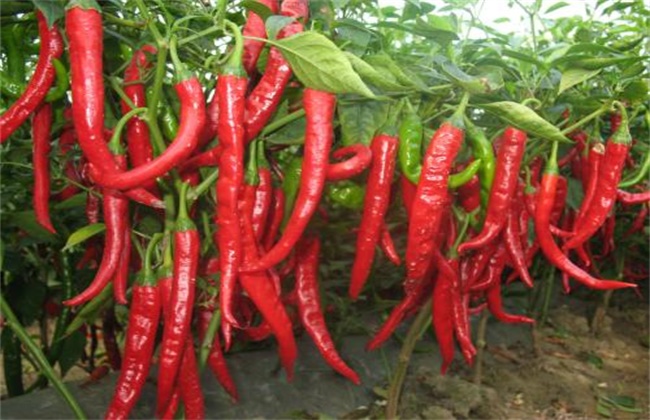
I. Causes
1. Poor flower bud differentiation
When cultivating in greenhouses in autumn and winter, many farmers worry about vigorous plant growth leading to flower and fruit drop, so they fail to properly insulate and keep the greenhouse warm in time, causing lower nighttime temperatures, which directly affects nutrient accumulation and causes hollow fruit. Too low a nighttime temperature prevents peppers from fertilizing normally, making flower and fruit drop and deformed fruit very likely later on, and it also causes physiological disorders in the plant itself, making physiological diseases very likely.
2. Excessive water control in the early stage
After planting and the first flower cluster, some farmers worry about vigorous plant growth and control water excessively, making the soil rather dry and the plants grow slowly. Insufficient water supply then causes poor flower bud differentiation and poor pollination, resulting in hollow fruit.
3. Poor root development
Unreasonable greenhouse management can cause poor root growth and development, blocking the roots' absorption of trace elements and resulting in hollow fruit. This is mainly caused by improper use of hormones, unreasonable cultivation, and soil salinization and compaction, leading to poor root development and a weaker ability to absorb fertilizer and water later on.
4. Unreasonable temperature control
The suitable temperature for pepper flowering and fruiting is 28-30°C during the day and 15-18°C at night. The day-night temperature difference should not exceed 10°C; too large a difference will cause the plants to grow leggy. Peppers generally begin to swell at night, and 15-18°C is most suitable for nutrient transport and transfer, promoting fruit growth, so too low or too high a nighttime temperature is unfavorable for vegetable growth.
5. Loss of balance between reproductive growth and vegetative growth
There are many causes of nutrient imbalance. One is that vigorous plant growth consumes more nutrients, leaving insufficient nutrition to supply the flowers; another is that the plants grow weakly, with thin and not sturdy enough stems, and the loose stems provide limited nutrition. Added to this, unreasonable harvesting of the lower fruits causes excessive burden on the plant, leading to insufficient nutrient supply.
6. Nitrogen deficiency
Blind fertilization causes antagonism between elements, which inhibits the plant's absorption of nitrogen. In addition, using large amounts of undecomposed farmyard manure requires large amounts of nitrogen during decomposition, thus competing with the plants for too much nitrogen and causing nitrogen deficiency.
II. Countermeasures
Prune branches, remove shoots and thin leaves in time, reasonably thin out hollow fruits on side branches, following the principle of neither overburdening nor over-vigorous growth, and keep the nighttime temperature at 15-18°C. When watering, apply trace-element water-soluble fertilizer along with the water, and combine it with spraying potassium dihydrogen phosphate foliar fertilizer. This can effectively promote the swelling and elongation of hollow fruits, and at the same time promote flower bud differentiation and pollination in the upper part of the plant, improving fruit quality.
The above is an introduction to the causes of hollow peppers and countermeasures. We hope it helps you. If you want to learn more related knowledge, please follow us.