Why doesn't chives tiller? A few solutions to teach you
Chives are the most common vegetable in our daily lives. Basically every household in rural areas grows some, and one planting can be harvested all year round, which is also related to the strong regenerative and tillering ability of chives. Many people find that after chives are harvested once, they grow back less and less, which is also due to a decline in the tillering ability of chives. So what causes chives not to tiller? Let's learn about it together with the editor.
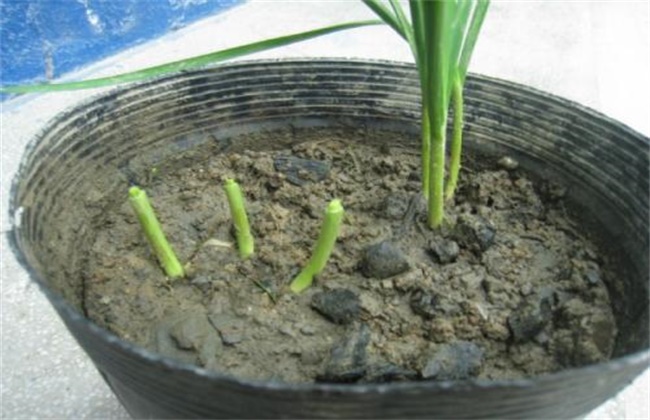
1. Improper sowing time
Chives have strong adaptability, with good heat tolerance and cold tolerance, but they cannot be sown all year round. Generally, the best time for sowing chives is April to May in spring, when the temperature begins to rise and generally stays between 10-20 degrees, which is very suitable for the growth and development of chives. However, if sowing is carried out in the hot summer season, the seeds will be unable to germinate normally, and the high temperature will also affect the tillering of chives. In autumn, chives grow very tall in the early stage, but the temperature drops rapidly, which will also affect the tillering of chives. Therefore, to get good tillering in chives, you must first choose a suitable sowing time.
2. Excessive planting density
Many people think that when planting chives, the denser the planting, the higher the yield, so they plant them packed tightly together, but this is a wrong practice. Once chives are planted too densely, when they begin to tiller, they need a certain amount of space. If there is not enough space for tillering, their tillering will stop. Of course, they should not be planted too sparsely either. After all, the tillering ability of chives is limited, and planting too sparsely will waste soil resources and affect the average yield.
3. Harvesting too frequently
Chives can be harvested multiple times from one planting, but if they are harvested too frequently during cultivation, it will not only affect the normal growth of chives, but also affect their tillering. During the growing period, chives should not be harvested too frequently, and harvesting must stop during the dog days of summer and after the beginning of winter. If harvested too frequently, it will not only affect the absorption of soil nutrients by chives, but also have a certain impact on the axillary buds of chives, thereby affecting their tillering.
4. Improper fertilizer and water management
The reason chives can be harvested continuously is not only related to their own strong regenerative function and tillering ability, but also has a great connection with fertilizer and water management. Because chives have a high yield, they need a large amount of fertilizer and water during the growing process. If watering and fertilizing are done too few times, then the lack of fertilizer and water will affect the normal tillering ability of chives.
The above is an introduction to the causes of and solutions for chives not tillering. We hope it can help you. To learn more related knowledge, please follow us.