Causes of Soy Sauce Fruit in Tomatoes and Preventive Measures
Many vegetable growers have reported that a large number of their tomatoes have developed soy sauce fruit. So-called soy sauce fruit refers to a large number of brown spots on the fruit surface. The spots vary in size and occur only on the peel, without affecting the flesh. Soy sauce fruit seriously affects fruit quality and greatly reduces returns, so it needs attention. Below, let's take a look at the causes of soy sauce fruit in tomatoes and preventive measures.
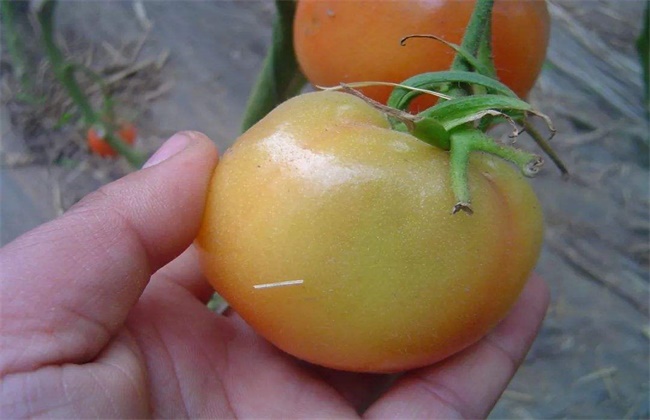
I. Causes of Soy Sauce Fruit in Tomatoes
1. Calcium deficiency
The main cause of soy sauce fruit in tomatoes is calcium deficiency. Calcium deficiency reduces the hardness of the cell walls of the tomato peel, making the peel thinner and highly susceptible to pathogen infection. In pursuit of yield, many farmers apply large amounts of nitrogen fertilizer and potassium fertilizer, which causes the root system to resist the uptake of calcium and can easily lead to insufficient calcium absorption by tomatoes.
2. Improper management
For autumn-winter tomatoes, if nitrogen fertilizer is applied excessively, with low temperature and high humidity, poor ventilation, and excessive planting density, diseases in the greenhouse can also become severe, and fruit at the front end of the same greenhouse compartment is more severely affected; large-fruited varieties are more severely affected than cherry tomatoes. In addition, improper management causing abnormal fruit coloring can also form soy sauce fruit.
3. Lycopene cannot be produced normally
During the color-turning stage of tomatoes, chlorophyll is decomposed and lycopene is formed, making the fruit surface bright. The optimal temperature for lycopene formation is 24°C. If the temperature is higher than 28°C or lower than 15°C, lycopene formation will be inhibited. If leaf removal causes direct sunlight to fall on the fruit surface, lycopene production will also be inhibited. Excessive application of nitrogen fertilizer can also increase plant chlorophyll, which likewise inhibits lycopene formation and leads to a large number of tea-brown spots on the fruit surface.
II. Preventive Measures
1. Calcium supplementation
When tomatoes enter the coloring stage, calcium needs to be supplemented in time to balance the calcium-potassium ratio. Many farmers develop calcium deficiency problems because too much potassium fertilizer is applied. Therefore, during the coloring stage, it is recommended to use foliar fertilizer containing calcium and magnesium, spraying it 2 times in succession, which can promote tomato coloring and prevent soy sauce fruit.
2. Ventilation management
During tomato cultivation, attention should first be paid to temperature regulation, and ventilation must be done well. If ventilation between narrow rows is poor, leaf thinning can be used to ensure light penetration and air movement, so that tomato quality is guaranteed.
3. Fertilization
If the soil EC value is too high, normal soy sauce fruit can occur, which is also a fertilization problem. At this time, the amount of fertilizer applied needs to be controlled and less fertilizer should be applied. During the growing season, irrigation with plain water can be done 2-3 times, which can alleviate the soy sauce fruit situation.
The above is an introduction to the causes of soy sauce fruit in tomatoes and preventive measures. We hope it can help you. To learn more related knowledge, please stay tuned to us.