How should legume vegetables be fertilized correctly?
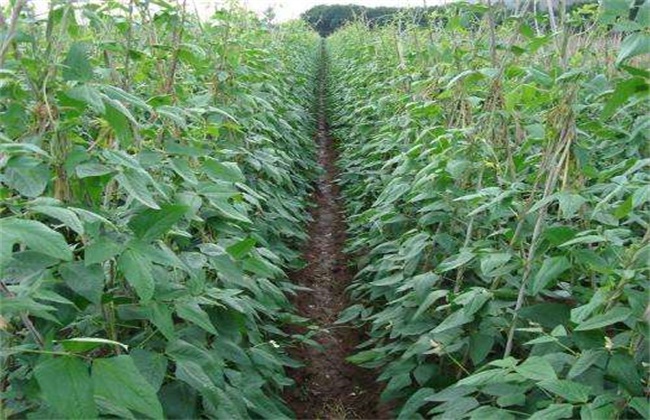
There are many kinds of vegetables, and legume vegetables are one of the common types in our daily lives. The legume vegetables we know well include common bean, cowpea, pea, edamame, broad bean, hyacinth bean, and others. Growing vegetables is inseparable from fertilizing, so how should legume vegetables be fertilized? Follow the editor to learn about it.
1. Base fertilizer as the main part, topdressing as a supplement
Base fertilizer generally accounts for 50%-60% of the total fertilization amount, and in areas with a high groundwater table or severe soil runoff, the amount of base fertilizer applied can be appropriately reduced to avoid loss of fertilizer efficiency. When planting in protected cultivation for a long time, the proportion of topdressing should be larger to ensure that legume vegetables can obtain sufficient nutrients throughout the entire growth period. During the flowering and pod-setting stage of legume vegetables, the demand for fertilizer is relatively large, and base fertilizer can no longer meet the needs of the plants at this time, so timely topdressing is needed to promote more vigorous plant growth. Topdressing is generally based on quick-acting chemical fertilizers.
2. Combine organic fertilizer with inorganic fertilizer
Organic fertilizer can increase the soil organic matter content, improve soil permeability, and benefit root growth and development, so organic fertilizer needs to be applied as topdressing during the growth process. However, organic fertilizer has slow and low fertilizer efficiency, so organic fertilizer needs to be used together with inorganic fertilizer, so that slow and quick effects can complement each other and make up for each other's shortcomings. When increasing the application of organic fertilizer, one point to note is that organic fertilizer needs to be fully fermented and decomposed to reduce the spread of pests and diseases and avoid damage to the plant root system.
3. Topdress according to need, topdress at the right time
Legume vegetables planted in soils of different fertility levels have different fertilizer requirements at different growth stages. Topdressing should be done at the right time and in the right amount according to soil fertility conditions and the fertilizer requirements at different growth stages. For example, for fertile soil, topdressing can be less; conversely, for poor soil, topdressing can be more. If the plants are growing vigorously, topdress less; if the plants are growing weakly, topdress more. The amount of topdressing at the seedling stage should be small, and topdressing during the flowering and pod-setting stage should be greater. In addition, topdressing at the seedling stage is mainly quick-acting fertilizer, mainly to promote robust seedling growth, while during flowering and fruiting, organic fertilizer and inorganic fertilizer need to be applied in combination.
4. Combine fertilizer with water, regulate fertilizer with water
Fertilizer and water depend on each other. After topdressing, water promptly, so that fertilizer and water are combined and better fertilizer efficiency can be achieved, especially when applying quick-acting fertilizer, which can accelerate the decomposition of fertilizer, dilute the fertilizer concentration, avoid root burn, and speed up the root system's absorption of fertilizer.
The above is an introduction to how to fertilize legume vegetables. I hope it can help you. To learn more related knowledge, please follow us.