When is the right time to plant tatsoi? A detailed guide to planting time and methods
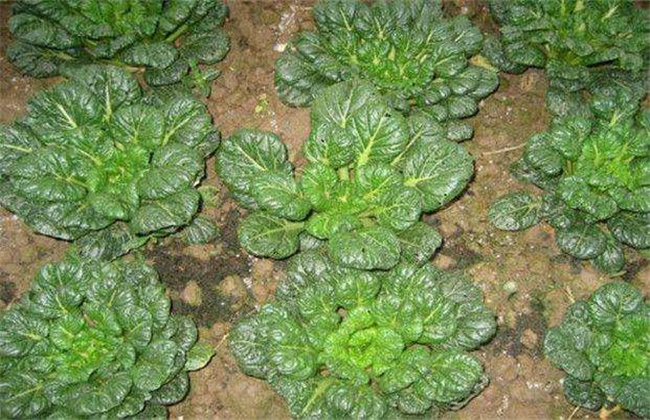
Tatsoi is a high-quality crop with edible and ornamental value, one of the main vegetables in winter, and also one of the more popular vegetables. So when is the best time to plant tatsoi? How should it be planted? Let's take a look.
1. Planting time
Tatsoi has extremely strong cold resistance, its growth period is generally about 70-80 days, and its suitable growth temperature is between 10-25 degrees, so it can be planted for most of the year. The autumn sowing time is generally in August-September, when the temperature allows direct open-field cultivation; if planting for winter, it can be brought to market before the Spring Festival for better returns, and it is generally sown around November.
2. Variety selection
The choice of tatsoi variety should be based on local soil, climate and other conditions to determine the planting time. If autumn sowing is chosen, it is best to select varieties with strong cold resistance, late bolting time and strong marketability. For example, Shanghai Xiaobaye and Zhongbaye are both good varieties.
3. Selection of planting site
Before planting tatsoi, the plot needs to be plowed and fertilized, with the soil deep-plowed about 15 cm. Fertilize according to the actual fertility of the soil: apply 3000-4000 kg of decomposed organic fertilizer per mu, together with 5-8 kg of urea, about 50 kg of superphosphate, and about 12 kg of potassium sulfate. After fertilizing, prepare the land according to the terrain: make beds on higher ground and form ridges on lower ground.
4. Sowing and raising seedlings
Tatsoi can be either direct-sown or raised as seedlings for transplanting. For autumn open-field cultivation, the direct sowing method can be used, covering with about 1 cm of soil after sowing, and the soil needs to be kept moist before sowing. Tatsoi emerges extremely quickly, generally sprouting in about three days. After emergence, pay attention to thinning the seedlings in time to avoid excessive watering causing the seedlings to grow leggy. Thin to a final stand 30 days after the seedlings emerge, keeping plant spacing at about 15 cm and row spacing at about 30 cm.
5. Field management
Tatsoi has a short growth cycle and requires relatively few fertilizer applications during its growth stages. Generally, one light fertilizer application after final thinning is enough, with about 8 kg of compound fertilizer applied per mu. Later, fertilizer can be applied according to the growth of the seedlings, with 5 to 8 kg of urea each time. The soil should be kept moist, but not too dry or too wet. In addition, attention should be paid to the prevention and control of pests and diseases. The pests and diseases of tatsoi are generally aphids, soft rot and whiteflies. For insect pests, imidacloprid, acetamiprid and the like can be used, while for soft rot, chlorothalonil and dubai can be used.
The above is an introduction to the planting time and methods for tatsoi. We hope it helps you. If you want to learn more related knowledge, please stay tuned to us.