What factors affect corn sowing time?
Corn is a grain crop with a relatively large planting area in China. Quite a lot of people grow it, and when growing corn, if you want to increase the yield, then the sowing time of corn is very crucial. However, corn sowing time is affected by many factors. So what exactly are the factors affecting corn sowing time? Today the editor will briefly introduce a few points for everyone. Let's take a look below!
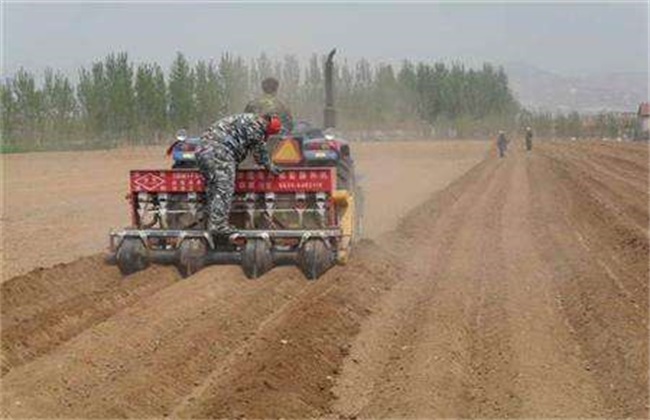
1. Temperature
Temperature has a very large impact on corn sowing time. If the temperature is too low, the seeds will be very difficult to germinate after sowing and are highly prone to frost damage. Moreover, in an environment with autumn frost, the ears cannot grow normally, causing yield and quality to be affected. Under otherwise normal conditions, the germination and emergence time of corn seeds is directly affected by the ambient temperature. The higher the temperature, the faster the seeds germinate and emerge. Therefore, appropriately delaying the sowing time helps improve the emergence rate, and sowing should be carried out when the temperature at a depth of 5 cm in the tillage layer is stable at 10 degrees.
2. Moisture
After corn seeds are sown, if they are to germinate and grow normally, then moisture is certainly indispensable. Therefore, after sowing, we should pay attention to maintaining a certain amount of moisture to improve the germination and emergence rate of the seeds. And the sowing period should be appropriately adjusted according to the weather of the region. For example, in regions such as Northeast China, spring is relatively dry, which will affect the sowing period of corn. And in regions such as Hunan, when growing spring corn, if the sowing time is improper, then after the seeds emerge they are very likely to suffer from spring drought, causing corn yield to decline.
3. Light
Light is likewise a key factor affecting corn sowing time. During the entire growth period of corn, the duration of light will have a direct impact on the growth period of corn. Therefore, it should be determined according to the growing region and the variety grown. For example, the growing season in northern China is relatively short, so if a southern variety is grown in the north, then it should be sown appropriately early. Conversely, if a northern variety is grown in the south, then it can be grown in spring, summer and other seasons. Sufficient light conditions should be provided according to the characteristics of the variety to ensure normal growth after the seeds are sown.
4. Others
Variety is the reason we have mentioned many times above. When planting, if it is a late-maturing variety, then the possibility of increasing yield is relatively large, and it can be sown in spring. But if the growing season is insufficient, then it must be sown early, otherwise it cannot mature in time, affecting planting benefits. Then there are also altitude, soil and so on. The higher the altitude, the longer the growth period of corn, so the sowing period should be adjusted in time. When planting in saline-alkali land, because the terrain is relatively low-lying and prone to water accumulation, it should be sown appropriately late.
The above is a brief introduction to the factors affecting corn sowing time. That is all for today's introduction. This article is for reference only, and we hope it can help everyone!