Precautions After Watering Chili Peppers in Winter
Winter temperatures are relatively low. When growing chili peppers in winter, many farmers only know that watering chili peppers in winter should be done scientifically, but they do not know what to pay attention to after watering. After watering in a winter greenhouse, the low ground temperature and high humidity inside often cause poor growth of chili peppers and frequent diseases. So what should be paid attention to after watering chili peppers in winter? Let's take a look together.
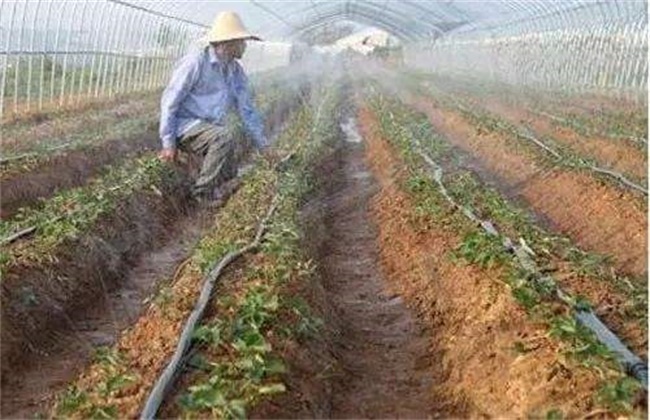
1. Raise the greenhouse temperature in time
After watering chili peppers in winter greenhouse cultivation, farmers should promptly close the ventilation openings and find ways to raise the greenhouse air temperature, generally about 2-3 degrees higher than usual, so that the rise in air temperature promotes the recovery of ground temperature and ensures the normal growth and development of chili peppers. If the greenhouse temperature is relatively low after watering, the ground temperature cannot recover in a short time, which will lead to poor root growth and development.
2. Remove moisture in time
After watering chili peppers in the greenhouse, the first thing farmers should do is to do a good job of moisture removal, and raising the greenhouse temperature is the most effective way to effectively reduce air humidity. After closing the greenhouse ventilation openings, during the process of raising the greenhouse temperature, the humidity inside the greenhouse will also decrease relatively. After the greenhouse temperature rises, gradually open the ventilation openings to further ventilate and reduce humidity.
3. Prevent condensation on the greenhouse film
After watering chili peppers, because the air humidity inside the greenhouse is relatively high, when the temperature inside the greenhouse rises, the greenhouse film is very prone to condensation, which affects the light transmittance of the greenhouse film. This will hinder the photosynthesis of chili pepper leaves and is not conducive to plant growth and development. When plant photosynthesis is insufficient, the plant synthesizes fewer nutrients and the yield is lower. You can apply anti-fog agent or bean flour water to the greenhouse film, which can prevent condensation on the greenhouse film.
4. Pay attention when using pesticides
After watering, the humidity in the greenhouse is already very high. If pesticides are sprayed at this time, the humidity in the greenhouse will become even higher. Therefore, after watering chili peppers, pesticide use should be avoided for 1-2 days. If pesticide use is necessary, it is best to choose dust agents or smoke agents, so that while preventing and controlling pests and diseases, air humidity can also be effectively reduced.
5. Prevent gas damage
Many farmers often combine topdressing with watering, but when topdressing, the fertilizer contains more nitrogen fertilizer. After these fertilizers are applied by flushing, a large amount of ammonia gas is produced. When the greenhouse is closed, the ammonia gas cannot be discharged in time, and it is very easy to damage chili peppers, causing gas damage. Therefore, after applying fertilizer with water by flushing, proper ventilation must be carried out to discharge harmful gases out of the greenhouse in time. In addition, when applying fertilizer by flushing, try to choose fertilizers with lower nitrogen content. In winter, the use of such fertilizers is prohibited to avoid gas damage.
The above is an introduction to what to pay attention to after watering chili peppers in winter. We hope it can help you. To learn more related knowledge, please follow us.