What are the misconceptions in winter greenhouse vegetable management?
Recently, due to the invasion of cold air, temperatures have dropped sharply. At this time, growing vegetables requires attention to details in certain aspects; otherwise, a small mistake can cause serious losses to greenhouse vegetables. In winter greenhouse vegetable management, the following misconceptions should be noted. Let's take a look together.
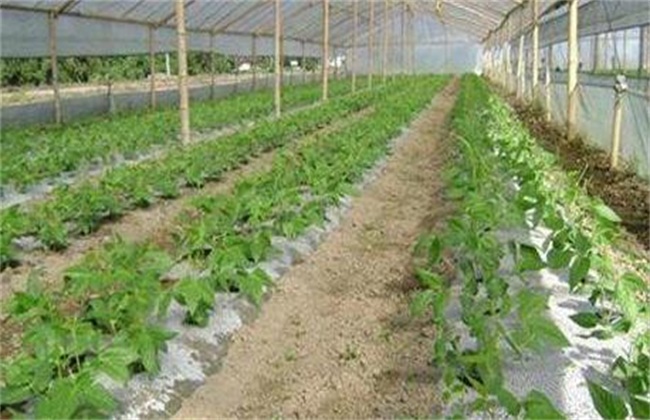
1. The higher the temperature, the faster the growth
Many vegetable growers believe that the main function of a greenhouse is to keep warm, and that the higher the temperature, the faster the vegetables grow. This is a wrong idea. Vegetables have an upper limit requirement for temperature; generally, the temperature should not exceed 32 degrees. Once the temperature is too high, the respiration of vegetables will intensify, causing plant disorder and excessive vegetative growth, an imbalance between vegetative growth and reproductive growth, and the yield will instead decline.
Preventive measures: First, set up two ventilation openings in the greenhouse to cool it down in time. Second, strictly manage according to the temperature required for each vegetable growth stage, so as to avoid the phenomenon of only growing leaves and not bearing fruit due to high temperatures.
2. The more fertilizer applied, the faster the growth
Many vegetable growers believe that since fertilizer can promote vegetable growth and development, the more fertilizer applied, the faster the vegetables grow. This is also a wrong idea. The soil salt content required for vegetable growth and development is limited. When excessive, the root system will instead undergo reverse osmosis, causing the plants to wither and the yield to decline. Especially in a high-temperature and high-humidity environment, organic fertilizer decomposes faster, the volatilization of nitrogen fertilizer is large, and excessive fertilization can easily cause fertilizer damage.
Preventive common knowledge: Generally, for plots that have been planted with vegetables for more than three years, farmyard manure should be controlled within 2500 kg, and chemical fertilizer should be reduced to about half of the usual amount. For plots with high salt content, more humic acid and bacterial fertilizer should be applied to increase the soil carbon-to-nitrogen ratio, increase soil permeability, reduce oxygen content, and alleviate fertilizer damage. In addition, balanced fertilization should be carried out, and trace elements such as boron, zinc, and magnesium should be supplemented to strive for sustained high yields.
3. The more vigorous the vines, the better the growth
Many farmers believe that the more vigorous the vine growth, the better the crop growth. In fact, with more water the leaves are vigorous and the roots must be shallow, and excessive vegetative growth will inevitably affect reproductive growth, instead reducing yield.
Preventive measures: First, control seedlings during the seedling stage. Promote downward rooting of the root system to form strong seedlings. Second, during the early stage of vegetable growth, vegetative growth is vigorous, while in the later stage reproductive growth is delayed, so a certain assimilating leaf area is needed in the early stage. In the later stage, control the vines and promote fruit set to increase yield.
4. The more frequently pesticides are sprayed, the fewer diseases there are
In order to prevent and control diseases and pests, many vegetable growers spray pesticides once every 2-3 days during the middle and late growth stages, because they think that the more frequently pesticides are sprayed, the lower the probability of disease occurrence. In fact, the more frequently pesticides are sprayed, the more likely it is to cause pesticide damage, which is extremely unfavorable to crop production.
Preventive measures: First, change the ecological environment. If field humidity is high and field permeability is poor, then even spraying pesticides every day may not be effective. Second, improve the soil. When transplanting, pay attention to soil treatment, especially soil-borne pathogens, and spray targeted pesticides for prevention. Third, use the right medicine for the right problem, and choose copper-based preparations as much as possible, which can kill both fungi and bacteria and also promote crop growth.
The above is an introduction to misconceptions in winter greenhouse vegetable management. We hope it can help you. If you want to learn more related knowledge, please follow us.