What to Do When Vegetable Seedlings Collapse? Cause Analysis and Control Methods
Vegetable seedling collapse, also called seedling damping-off, is a common phenomenon during the raising of gourd and fruit vegetable seedlings in winter and spring, and it has a fairly large impact on production. It most easily occurs around the time the seedlings emerge from the soil and the first true leaf appears. At first only a few seedlings fall over, but by the next day large patches of seedlings fall over and die, causing enormous losses. So what causes vegetable seedling collapse? How should it be controlled? Let's take a look together.
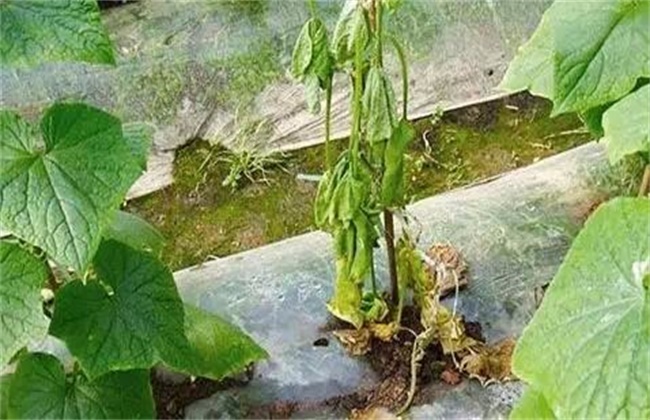
I. Causes of Seedling Collapse
1. Improper seedling raising
According to surveys of greenhouse vegetable seedling raising in many places, the symptoms of gourd and fruit vegetable seedlings falling over and dying within a short time after emergence are mainly caused by three things. First, the vegetable seeds carry pathogens and have not undergone any disinfection or sterilization treatment, so the seedlings show collapse when they emerge; second, the soil contains soil-borne pathogens and has not undergone any suppression or sterilization treatment, so after emergence the pathogens infect the seedlings, often causing them to fall over and die; third, at emergence the seedlings are in a low-temperature, rainy and high-humidity environment, which easily induces disease, and after infecting the seedlings it very easily leads to seedling collapse and death.
2. Damage from diseases
Vegetable seedling collapse in gourds and fruits is generally caused by damping-off, Rhizoctonia rot (sore shin), and Fusarium wilt. Damping-off generally occurs before the seedlings have 2 true leaves; sore shin generally harms solanaceous vegetables; and Fusarium wilt mainly harms the seedlings of cucurbit vegetables. These three diseases are the most likely to cause greenhouse vegetable seedling collapse. Because their transmission routes differ, their control methods also differ, and prevention should be the main approach.
II. Control Methods
1. Agricultural control
For agricultural control, first, the seedbed should be changed every year, and seedlings should not be raised on the same plot repeatedly; second, sufficient base fertilizer should be applied to the seedbed, and the base fertilizer must be fully decomposed, so that undecomposed fertilizer does not bring in pathogens and insect eggs; third, control agents should be applied together with the base fertilizer, which can effectively suppress soil-borne diseases; fourth, the seeds should be disinfected and sterilized, and the simplest method is to soak them in 55-degree medium-temperature water for 10 minutes, or seeds can be dressed with chemicals. Before sowing, the soil can also be disinfected and sterilized with carbendazim or thiophanate.
2. Chemical control
In the early stage of seedling disease, a 500-fold dilution of copper sulfate solution can be sprayed on the seedbed or used to drench the roots after planting, which can achieve excellent control results.
The above is an introduction to the causes of vegetable seedling collapse and control methods. We hope it can help you. To learn more related knowledge, please follow us.