What are the control methods for asparagus stem blight?
Asparagus is a stem vegetable that people often eat, but the occurrence of stem blight during cultivation can cause severe yield reduction. Stem blight is also called the cancer of asparagus; in mild cases it reduces yield, and in severe cases it causes total crop failure, bringing huge losses to growers. So how should asparagus stem blight be controlled? Let's take a look together.
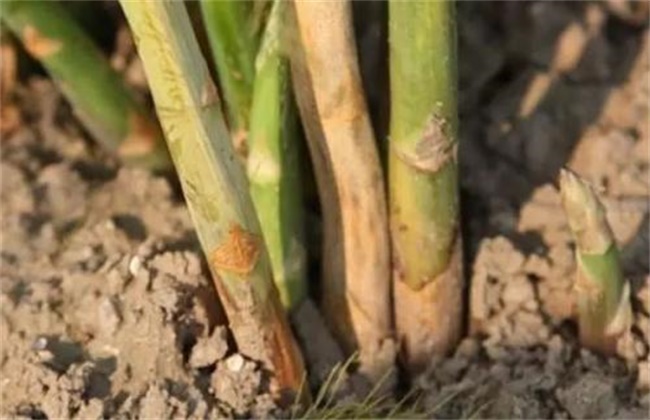
I. Disease symptoms
The pathogen of asparagus stem blight infects young stems and young branches. After infection by the pathogen, needle-like milky white spots the size of a pinprick first appear at the infection site, gradually expanding into small spindle-shaped or fusiform water-soaked spots, and the lesions gradually turn brown, with the center grayish brown, sunken, and scattered with small black dots, namely pycnidia. In severe cases, the lesions cover the entire plant, and when a lesion encircles the stem completely, the entire plant withers and dies.
II. Occurrence pattern
When it is cold in winter, the aboveground part of asparagus dies, and the pathogen overwinters on diseased residues as mycelium and conidia. In spring, when temperature and humidity are suitable, conidia are produced from the pycnidia and cause primary infection. In greenhouse cultivation, because asparagus grows all year round, this also provides favorable conditions for asparagus stem blight; the pathogen does not undergo overwintering dormancy or primary infection, and multiple infection cycles can occur throughout the year.
III. Control methods
1. Select disease-resistant varieties
To control stem blight, the first step is to start from the source. Before raising seedlings, the seeds should first be disinfected to control the pathogen of stem blight, and preventive measures should be taken during seedling management. Observe frequently, spray carbendazim and mancozeb once every half month as preventive chemical control, and also control aphids, thrips, noctuid moths and other larvae.
2. Do a good job of clearing the garden
Winter garden clearing is a key link in disease prevention for asparagus. Whether the garden is cleared promptly and thoroughly plays a decisive role in the incidence of stem blight the following year. The best way to control stem blight is to reduce the pathogen base, and the way to reduce the pathogen base is garden clearing.
3. Rain-shelter cultivation in greenhouses
Rain-shelter cultivation in greenhouses is the most effective method to control asparagus stem blight. Using greenhouse cultivation, first, it can prevent rainwater from entering the greenhouse and block its transmission route; second, it can regulate temperature, prevent premature aging of plants, and improve immunity; third, fumigation fungicides can be used, greatly reducing manpower, material resources and financial resources; fourth, it significantly prolongs the harvest period and increases yield.
4. Chemical control
The main fungicides that can be used for controlling stem blight include carbendazim, mancozeb, chlorothalonil, Bordeaux mixture, etc. To avoid the development of fungicide resistance, different fungicides should be used alternately.
The above is an introduction to the control methods for asparagus stem blight. We hope it can help you. To learn more related knowledge, please follow us.